
Key takeaways
- The Question: What does good housekeeping look like on a construction site, who owns it, and how do you keep it from slipping when the programme gets tight?
- The Answer: Housekeeping covers waste, material storage, access routes and the small hazards such as trailing cables that build up during each shift. It holds when responsibilities are written into every subcontract, the site is set up so that tidiness is the easy option, and conditions are scored and tracked by location every week, with each problem given an owner and closed only on fresh evidence.
- The YelloSKYE Angle: Drone, 360° and fixed-camera views from Construct IQ build a dated record in DEX. A housekeeping problem is pinned where it sits and checked again on the next capture, which turns tidiness into something a team can measure.
Construction site housekeeping is the daily discipline of keeping a site in order: clearing waste as it is created, storing materials where the plan says they belong, keeping walkways, stairs and escape routes open, and controlling the cables, hoses and offcuts that collect around every work face. Done well, it prevents slips, trips and falling-object injuries, reduces fire load and stops materials being damaged or lost. Done badly, it is usually the first visible sign that a site is under pressure. This guide covers the standard to aim for, how to divide responsibility between trades, how to set the site up so that order is the default, and how to track performance with the same construction monitoring captures many teams already use for progress.
What good housekeeping covers
Housekeeping is broader than sweeping up. It covers anything that affects whether people and materials can move safely and whether the next trade can start on time.
| Area | What good looks like | Typical failure | Main consequence |
|---|---|---|---|
| Waste and offcuts | Cleared to a collection point during the shift, segregated by type | Piles left in corners and stairwells "for later" | Trip hazards, fire load, delays to the next trade |
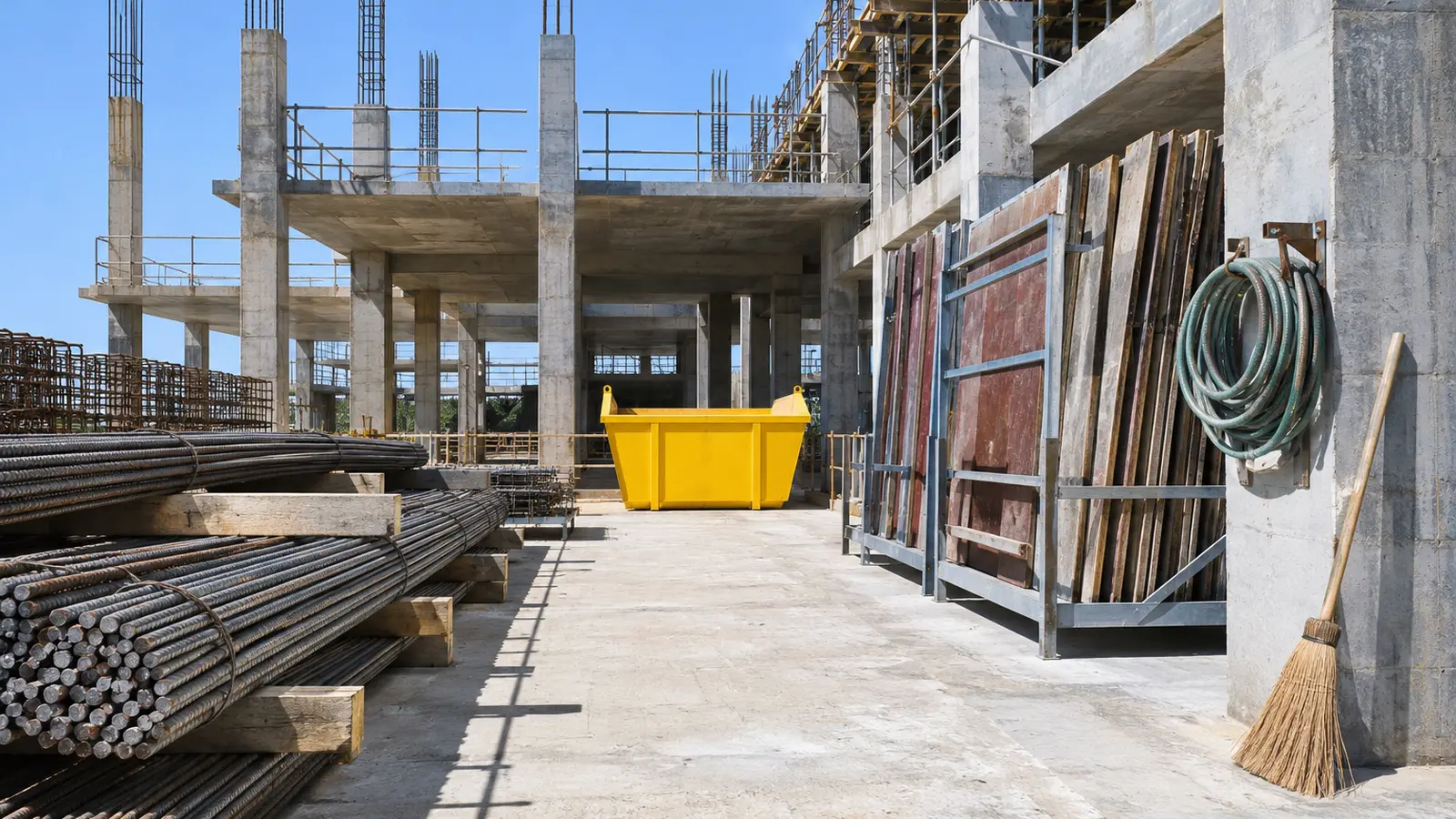
| Material storage | Stacked stable, off the ground, inside marked zones, close to where it will be used | Pallets against edge protection or blocking doors | Falling objects, damaged stock, blocked routes |
| Walkways and stairs | Clear, lit, level and free of loose items | Boards, tools and packaging left on treads | Slips, trips and falls |
| Escape routes | Unobstructed to a final exit, signed and lit | Temporary storage in corridors and lobbies | Delayed evacuation |
| Cables and hoses | Routed overhead or along walls, never across main routes | Leads trailing across corridors and stairs | Trips and damaged equipment |
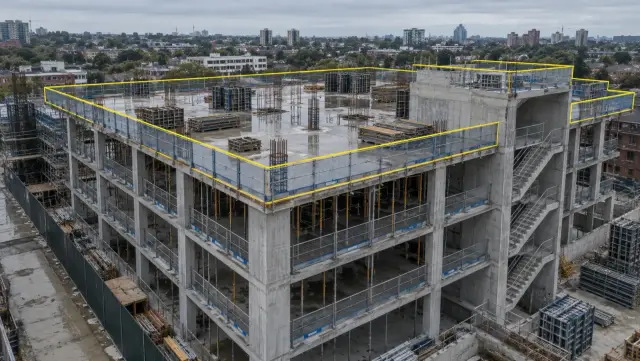
| Edges and openings | Kept clear so nothing can be kicked or knocked over | Offcuts stacked at slab edges | Objects falling onto people below |
| Welfare and rest areas | Clean, stocked and separated from work areas | Used as overflow storage | Poor morale, hygiene problems |
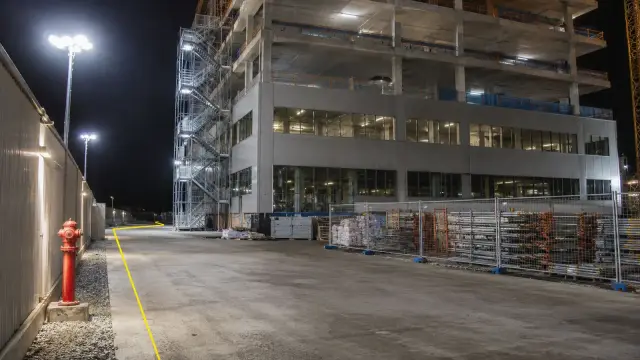
| Perimeter and gates | Hoarding intact, roads kept free of mud and spoil | Spoil tracked onto public roads | Complaints, enforcement, accidents |
Why housekeeping deserves management attention
Next to cranes and excavations, tidiness can look minor. In practice it feeds almost every other risk on site.
Injuries
Slips, trips and falls on the same level are among the most common causes of non-fatal injury on construction sites, and many of them come from material, waste or cables left in a walkway. Loose items near edges are a frequent cause of struck-by incidents, because a board or offcut nudged off a slab can fall several storeys. Our guide to construction safety statistics sets out the wider injury picture.
Fire
Packaging, timber offcuts, insulation scraps and solvent-soaked rags are fuel. When they accumulate near hot work or temporary electrics, a small ignition becomes a serious fire, and the same piles can block the escape routes people need. The construction fire safety guide covers fire load and escape routes in more depth.
Productivity and cost
Disorder costs time in ways that rarely appear on a report. Crews search for materials that were stacked somewhere unexpected, move the same pallet two or three times, and wait while the previous trade clears its rubbish before they can start. Materials stored badly get crushed, wet or contaminated and have to be reordered.
Quality
Debris left on a slab ends up trapped under screed or floor finishes. Dust and swarf from cutting damage finished surfaces and contaminate mechanical services. Areas handed over dirty push the next trade to start on a poor surface, and the defects show up at snagging.
Waste volumes
Building work is one of the largest waste producers in any economy: in the EU, according to the European Commission, it accounts for over a third of the total. Separating waste where it is produced is the practical first step towards recycling more and paying less for disposal.
Deciding who is responsible
Most housekeeping arguments start with unclear responsibility: when everyone owns the shared areas, nobody clears them. Settle the split before trades arrive and write it into each subcontract.
| Approach | How it works | Strengths | Weaknesses |
|---|---|---|---|
| Each trade clears its own | Every subcontractor removes its own waste to collection points, daily | Clear accountability, cost sits with the producer | Shared areas and unclaimed rubbish fall between trades |
| Central cleaning crew | Main contractor employs a team to clear all areas | Consistent standard, nothing unclaimed | Trades get careless, cost is spread unfairly |
| Combined | Trades clear their work faces; a central crew handles routes, stairs, landings and skips | Covers both own and shared areas | Needs a clear boundary between the two |
The combined approach suits most projects of any size. Whatever you choose, the subcontract should state:
- the standard each trade must leave its area in at the end of every shift
- where waste goes and who provides the skips, bins and chutes
- how unclaimed rubbish is handled and how its cost is shared
- the notice a trade receives before the main contractor clears its mess and charges for it
That last point matters. A back-charge for cleaning only holds up if the trade was told about the problem, given a reasonable time to fix it, and shown evidence of where it was and who left it. Our guide to subcontractor management covers back-charges and the evidence they need.
Setting the site up so order is the easy option
People keep a site tidy when it is easier than leaving a mess. Most of that is decided in the site layout and the logistics plan, long before the first skip fills up.
Waste streams
Put collection points close to the work. On a multi-storey building that means wheeled bins or bags on every active floor, a chute or a hoist slot for taking waste down, and segregated skips at ground level for timber, metal, plasterboard, packaging and general waste. If the nearest bin is three floors away, offcuts will stay where they fell.
Material storage
Order and deliver materials close to when they will be installed, so that floors do not fill up with stock waiting for weeks. Allocate marked storage zones on each level and at ground, keep stacks off the ground and below a safe height, and keep them back from slab edges and openings. Laydown areas and delivery rules belong in the site logistics plan.
Routes
Mark pedestrian routes, keep them separate from vehicle routes, and make sure they are lit and level. Escape routes need the same protection and should be checked whenever hoarding or temporary partitions move.
Cables, hoses and tools
Provide hooks, cable hangers and wall brackets so leads can run overhead or along walls. Give each trade a place to store tools and small plant at the end of the day.
Time
Build ten or fifteen minutes into the end of each shift for clearing up, and protect it when the programme gets tight. A site that only gets cleaned when a client visit is booked has no housekeeping system.
Applying 5S on site
Many contractors borrow the 5S method from lean manufacturing to give housekeeping a structure. It translates to construction with a few adjustments.
| Step | Meaning | On a construction site |
|---|---|---|
| Sort | Remove what is not needed | Return surplus stock, clear redundant temporary works, remove broken tools |
| Set in order | A place for everything | Marked storage zones, labelled bins by waste type, tool storage per trade |
| Shine | Clean and inspect at the same time | End-of-shift clear-up, used as a moment to spot damage and hazards |
| Standardise | Make the good state the rule | A written housekeeping standard per zone, with photos of what "good" looks like |
| Sustain | Keep it going | Regular scored inspections, trends reviewed, problems followed up |
Most sites fall down on the last two steps: a big clean-up is easy, but keeping it clean for months takes a system.
How housekeeping changes by phase
The risks move as the building grows, so the checklist should move with them.
| Phase | Main housekeeping concerns |
|---|---|
| Enabling and groundworks | Mud on roads, spoil heaps, unprotected excavations, plant routes |
| Frame | Offcuts and props at slab edges, formwork storage, rebar stacks, debris falling between floors |
| Envelope | Packaging from cladding and glazing, fixings dropped from height, waste on scaffolds |
| Fit-out | Many trades per floor, plasterboard and packaging waste, dust, cables, crowded stairs and lobbies |
| Commissioning and handover | Protection of finished surfaces, final cleans, removal of all temporary storage |
Fit-out is usually the hardest period: more trades share less space, waste peaks and corridors become stores, so inspect more often.
Tracking housekeeping so it stays fixed
A site can be tidy on Tuesday and chaotic by Friday. The only way to know whether standards are holding is to check the same areas on a fixed rhythm and keep the results.
Score zones on a fixed checklist
Break the site into zones that match how it is managed, such as each floor, the yard, the gate and the roads. Score each zone against the same short checklist every week, using the areas in the first table above. Keep the scoring simple, for example good, acceptable or poor, so that different inspectors reach the same result.
Log every problem at its location
A note that says "rubbish on level 4" does not help anyone. Record the exact location, attach a photograph, name the trade responsible where it is known, and set a date for it to be cleared. Location-tagged records also stop the same problem being logged twice by different people.
Close items only on fresh evidence
An item is closed when someone has seen the area cleared, not when the trade says it has been done. Compare a capture from the same position before and after the deadline.
Watch trends, not single walks
Four measures tell you most of what you need:
| Measure | What it shows |
|---|---|
| Open items by zone | Where the problems are now |
| Average time to clear | Whether trades respond to notices |
| Repeat locations | Places where the layout, not behaviour, needs fixing |
| Items by trade | Who needs a conversation, and who deserves recognition |
A location that keeps reappearing usually means something in the setup is wrong: a bin is too far away, a storage zone is too small or a route invites shortcuts. Fix the cause rather than issuing the same notice again.
Where visual capture helps
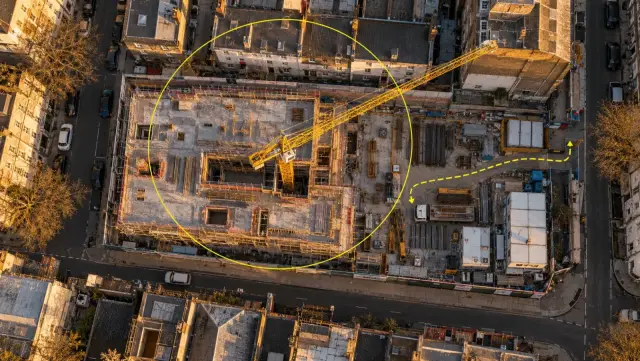
Walking every floor every day is not realistic on a large site, and memory is a poor record. Regular capture gives the housekeeping review a dated, located picture of each area. 360° walks show conditions inside the building, drone flights show laydown areas, skips, roads and the perimeter, and fixed cameras watch the places that change hour by hour, such as gates and yards.
In YelloSKYE's Construct IQ, all three feeds land in DEX on one timeline. A problem is annotated on the image at its real position, so a trade cannot dispute which pile is theirs, and the timeline playback lets a reviewer step back through earlier days to see when a mess appeared and whether it was cleared. In the interior fit-out use case, ordinary site staff made the 360° captures with no specialist on hand, and visual issue logs closed snags five times faster. Fixed cameras can watch a material yard or a gate continuously, and across verified fixed-camera deployments teams made up to 80 per cent fewer trips to site. Weekly drone flights in the aerial progress capture use case saved site managers over 15 hours of manual reporting each week.
Imagery has limits. It shows that a route is blocked or a slab edge is cluttered; it does not show whether a stack is stable or a lead is damaged. Use it to target physical inspections, not to replace them. The construction safety monitoring guide covers what imagery can and cannot confirm.
Weekly housekeeping checklist
- Walk or review every zone against the same short checklist and record a score per zone.
- Check escape routes and stairs first, end to end, and clear any obstruction the same day.
- Look at slab edges and openings for offcuts, props and loose materials.
- Confirm storage is inside marked zones, stable, off the ground and away from doors and edges.
- Check bins, chutes and skips are emptied, segregated and close enough to the work.
- Log each problem at its location with a photo, an owner and a deadline.
- Close last week's items only after seeing each area cleared on a new capture or visit.
- Review repeat locations and change the layout, bin position or storage zone that is causing them.
- Share the scores by trade and zone at the weekly coordination meeting, recognising good performers as well as poor ones.
- Update the logistics plan when storage zones, routes or waste points move.