
Key takeaways
- The Question: Why does construction keep running short of skilled people, how does that shortage play out on a live project, and what can contractors and owners do about it?
- The Answer: Retirements, a weak pipeline of new entrants, long training times and competition from other sectors keep skilled labour scarce in many countries. On site it appears as slower trades, thinner supervision, more overtime and more rework. Contractors respond by needing fewer site hours (offsite manufacture, better sequencing, less rework) and by keeping and widening their workforce.
- The YelloSKYE Angle: Construct IQ does not add workers. It takes reporting and checking work off skilled people: drone flights, fixed cameras and 360° walks build a dated site record on DEX, so fewer hours go on manual reports and repeat site visits.
The construction labour shortage is the gap between the number of skilled workers the industry needs and the number available, and in many countries it has become a permanent feature of planning rather than a temporary squeeze. It is driven by retirements, a thin pipeline of new entrants, long training times and competition from other sectors. Contractors cannot hire their way out of it quickly, so the practical response is to need fewer site hours for the same work and to protect the time of the skilled people already on the job. Site visibility through construction monitoring is one part of that, alongside offsite manufacture, planning and retention.
This guide covers the causes, how the shortage shows up on projects and the responses that work across building types. For the specific pressures on electrical and commissioning trades in hyperscale and colocation projects, see our separate guide to the data centre construction labour shortage.
How big is the gap?
Estimates differ because countries count workers, vacancies and future demand in different ways, but the direction is consistent. Two examples:
- United States. Associated Builders and Contractors publishes an annual estimate of how many workers the industry must attract on top of normal hiring to meet demand. Its 2024 estimate was around half a million.
- United Kingdom. The Construction Industry Training Board's Construction Skills Network forecast published in 2024 estimated that around 250,000 extra workers would be needed over the following five years.
Similar concerns have been reported by industry bodies across Europe, Australia and other regions. The trades in shortest supply vary, but electricians, mechanical fitters, experienced site supervisors and specialist finishing trades appear on many lists.
Why the shortage persists
An ageing workforce
In many markets a large group of experienced tradespeople is nearing retirement. When they leave, they take not only labour hours but also the judgement that keeps junior crews out of trouble.
A weak pipeline of new entrants
Construction competes for school leavers against jobs that are seen as cleaner, safer or more predictable. The physical demands, early starts, travel and long hours put many people off, and the industry's image as slow to modernise does not help.
Boom and bust
Employment in construction rises and falls with interest rates and public spending. Workers who were laid off in a downturn often do not return, and firms that remember the last slump hesitate to take on apprentices.
Long training times
A fully qualified electrician or experienced supervisor takes years to develop. Even a well-funded training push today produces people for projects several years from now.
Competition from other sectors
Energy transition projects, grid upgrades, manufacturing plants and infrastructure programmes all want the same electricians, welders and engineers. When several large programmes peak in one region, building projects lose out on rates.
More specialised work
Buildings carry more services, controls and digital systems than they used to. The share of work that needs specialist skills has grown, while general labour has become a smaller part of the mix.
How the shortage shows up on a project
The shortage rarely appears as an empty site. It appears as a series of smaller symptoms that add up to delay and cost.
| Symptom | What the team sees | Knock-on effect |
|---|---|---|
| Trades hard to procure | Fewer bids, longer lead times, higher rates | Packages let late, less choice of subcontractor |
| Smaller crews than planned | Trade output below the rate the programme assumed | Float consumed, following trades delayed |
| Thin supervision | One supervisor covering several areas or trades | Quality slips, questions wait for answers |
| Less experienced crews | More queries, slower learning on repeated work | More rework and failed inspections |
| Heavy overtime | Long days and weekend working to recover | Fatigue, higher incident risk, staff turnover |
| Crews moving between sites | Gaps when a crew is pulled to another job | Stop-start progress, lost learning |
The common thread is that each skilled hour is worth more than it used to be, so any hour lost to waiting, rework or administration hurts more.
How contractors respond
Build more off site
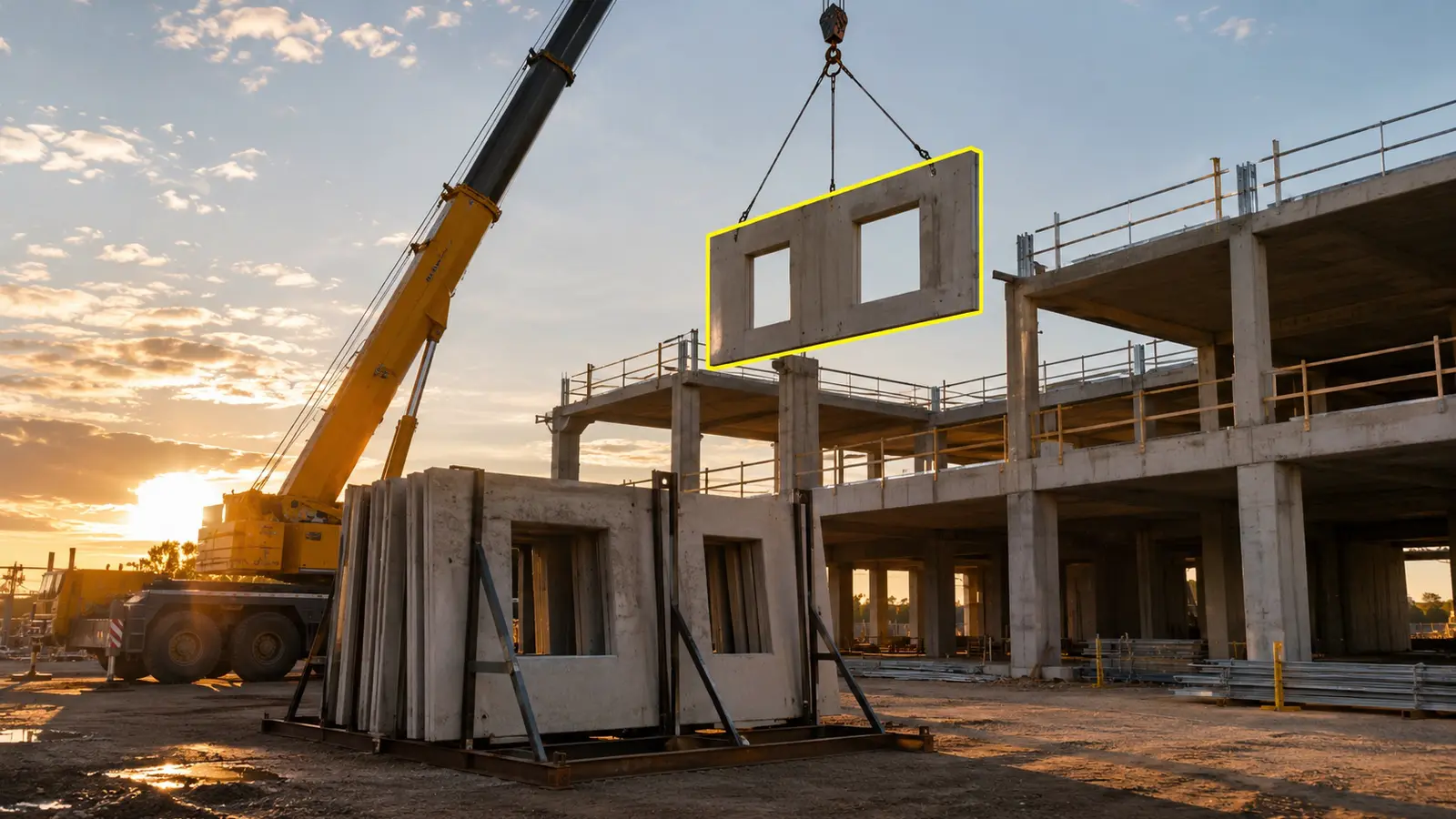
Factory-made components, from precast panels and reinforcement cages to bathroom pods and prefabricated services risers, move labour from the site into a controlled environment where fewer people produce more. They also reduce the number of trades competing for space on site. The trade-off is that design must be fixed earlier and logistics planned carefully, because a late or wrong module is hard to work around.
Sequence work so crews never wait
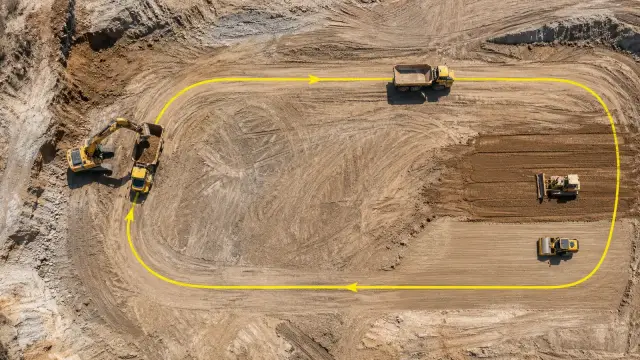
When labour is scarce, a crew standing idle because the area is not ready is the most expensive form of waste. Lookahead planning with the trade foremen, a constraint log and a clear definition of when an area is ready for the next trade protect the hours of every crew. The ideas behind this are covered in our guide to construction productivity.
Cut rework
Rework uses scarce labour twice. Inspecting earlier, giving crews current information and keeping a dated record of what was installed all reduce it, and they matter more when crews are less experienced.
Keep the people you have
Recruiting is slow and expensive, so retention is often the fastest way to protect capacity. Practical measures include:
- Predictable working hours and limits on sustained overtime, which reduce fatigue and turnover.
- Continuity of work, so good crews move from one project to the next with the same contractor.
- Visible training and progression, from apprentice to supervisor.
- Decent site welfare, which costs little relative to the cost of replacing a skilled worker.
Widen the pool
Apprenticeships, routes for career changers and veterans, and recruitment from groups that are under-represented in construction all add to supply. They take time to pay off, which is why they need to start before the next peak rather than during it.
Lock in labour early
Early contractor and subcontractor involvement, framework agreements and programme-level procurement give trades the certainty to commit crews. Owners with a pipeline of projects can secure capacity that a one-off project cannot.
Use technology where it frees skilled time
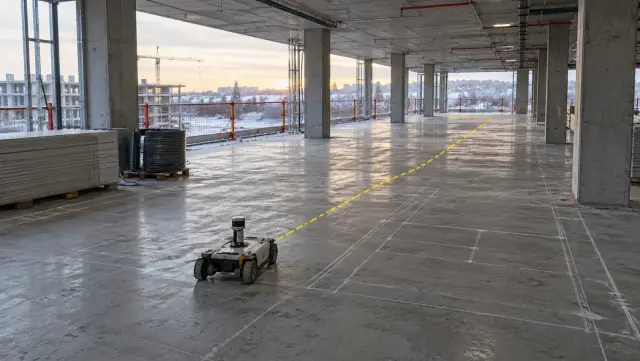
Technology helps most when it takes repetitive work away from skilled people rather than trying to replace them. Robotic layout marking, automated scanning and drilling robots are in use on some sites; our guide to construction robotics explains what they do today and their limits. Much of the gain, though, comes from simpler changes: less time writing reports, fewer trips to check progress in person and faster answers to site questions.
What owners and clients can do
The shortage is often treated as the contractor's problem, but owners shape a lot of the conditions that decide how much labour a project needs.
- Allow realistic durations. Programmes that assume full crews from day one push contractors into overtime and stacking as soon as a trade comes in short.
- Decide design early. Late changes waste skilled hours and make offsite manufacture harder to use.
- Standardise across a portfolio. Repeated details and components let crews and factories learn from one building to the next.
- Pay promptly. Subcontractors with healthy cash flow can keep and train their people; those waiting months for payment shed them.
- Accept evidence remotely where possible. Reviewing progress and milestones from a shared record reduces the number of site visits that pull supervisors away from the work.
What technology can and cannot do
It is worth being clear about the limits. No current technology installs ductwork, terminates cables or hangs plasterboard at scale. Software does not create trades. What it can do is give back hours to the scarce people who plan, supervise and check the work.
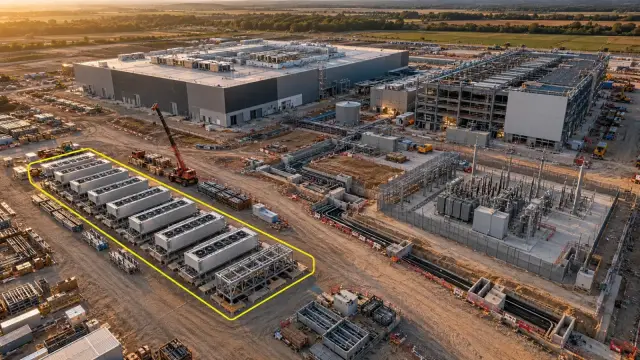
That is where Construct IQ fits. Drone flights, fixed cameras and 360° walks build a dated record of the site in DEX, which project managers, engineers and owners can review without travelling. On our aerial progress capture project, weekly flights replaced manual progress reports and gave site managers back more than 15 hours a week. Combining fixed cameras with scheduled drone capture and DEX has cut site visits by up to 80 per cent in verified YelloSKYE deployments, as the fixed-camera monitoring use case describes. And because a 360° walk needs no specialist operator, any member of the site team can keep the interior record current; in the interior fit-out use case, that record cut coordination time by 70 per cent.
None of this fills a vacancy. It means the supervisor you have spends more of the day supervising.
A planning checklist for a thin labour market
- Check labour availability before fixing the programme. Ask trade contractors what crew sizes they can actually commit, and plan to those numbers.
- Identify work that can move off site and fix its design early enough to allow factory lead times.
- Procure scarce trades early and give them as much certainty about dates as possible.
- Run a lookahead with a constraint log so no crew arrives at an area that is not ready.
- Set limits on sustained overtime and watch for fatigue in incident and quality data.
- Protect supervisor time by automating progress reporting and reducing routine site visits.
- Track output per crew hour on key activities so you can see when a smaller or less experienced crew is falling behind.
- Keep good crews together across projects and invest in their progression.