
Key takeaways
- The Problem: Owners and operators of working warehouses and logistics parks need a regular, reliable picture of roof, cladding, racking zone, yard and drainage condition, but scaffolding, rope access and lift hire interrupt the operation they are trying to protect.
- The Solution: Scheduled drone condition surveys with RGB and thermal sensors, flown around live operations and repeated on the same routes, so every inspection can be compared with the last one in the DEX platform.
- The ROI: 90% reduction in inspection cost, no operational downtime, and condition reports ready for insurance renewals and maintenance planning within 48–72 hours of capture.
The Challenge: Inspecting a Building That Never Stops
A distribution warehouse earns its keep by running. Trucks arrive through the night, forklifts work the aisles and pickers move between racking all day. That makes routine condition inspection awkward. Scaffolding blocks aisles and dock doors. Rope access teams are slow on large roofs. Mobile platforms in high-bay areas mean closing zones that the operation needs.
The result is that many facilities are inspected less often than they should be, or only after something has failed. A ponding area on the roof becomes a leak over stock. A loose cladding panel goes unnoticed until a storm. When the insurance renewal comes round, the owner has a handful of phone photos and an old report rather than a current, consistent record of the building.
The YelloSKYE Solution: Repeatable Condition Surveys
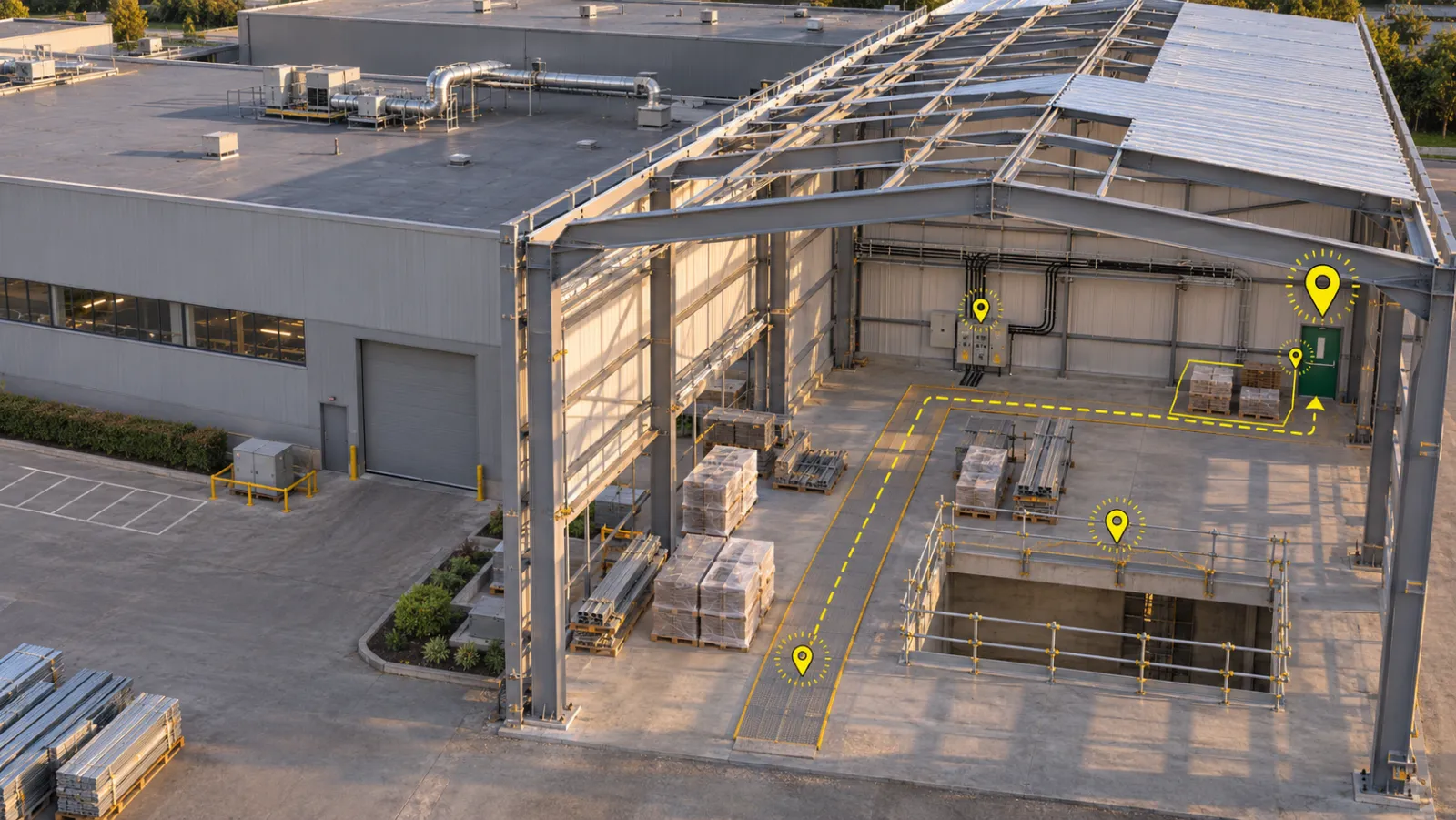
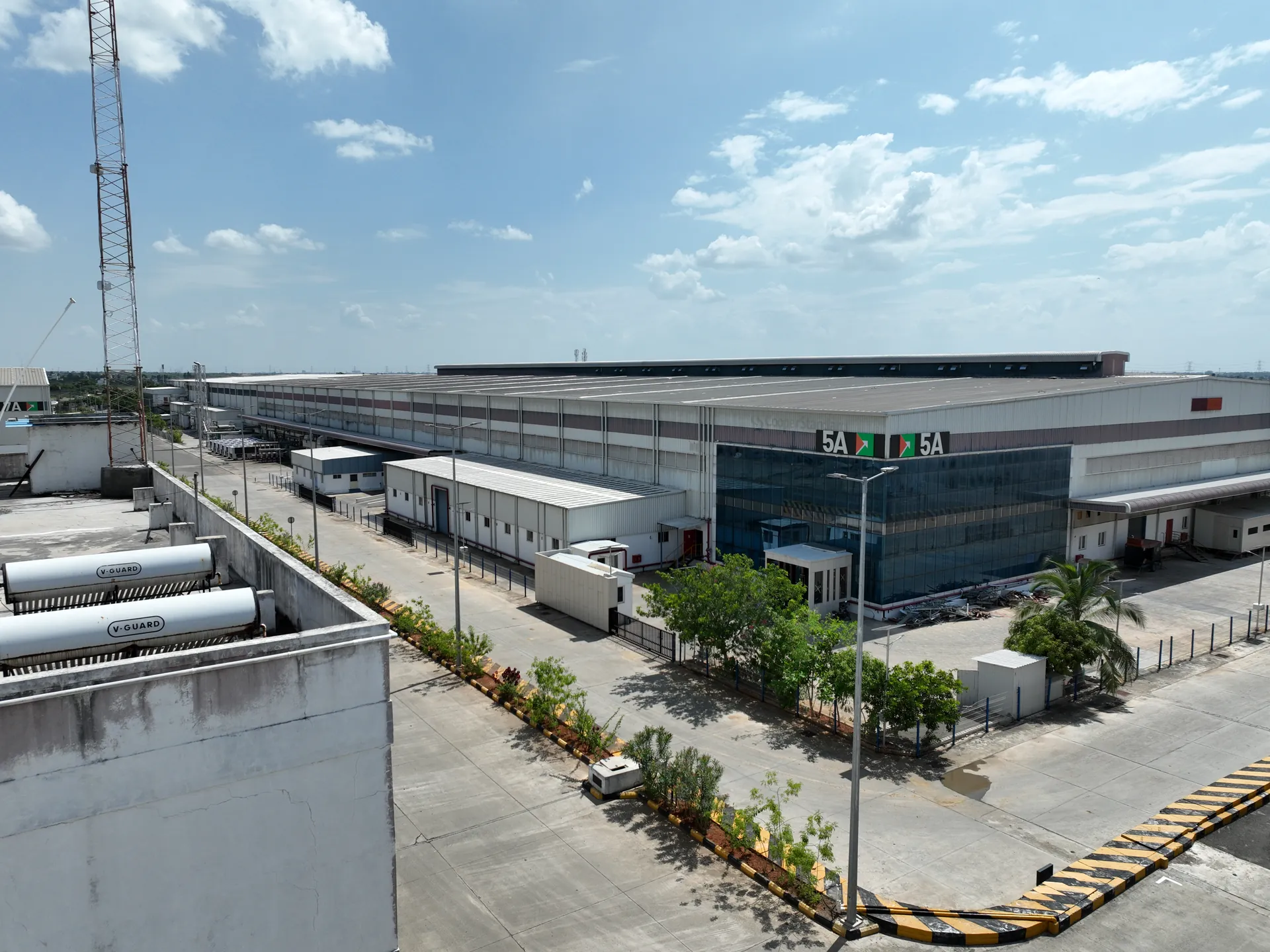
YelloSKYE flies each facility on a planned, repeatable route, so the roof, envelope and external areas are captured the same way every time. Survey windows are agreed with the site team around shift patterns and yard traffic, and nothing has to stop.
- Roofs: Thermal and RGB capture to spot water pooling, membrane damage, insulation gaps and moisture infiltration across large roof areas. A full roof survey of a 50,000 sq ft warehouse takes around 2–3 hours.
- Cladding and envelope: Close-range imagery of wall panels, fixings, gutters, rooflights and dock canopies to map cracking, corrosion and failing seals without working at height.
- High-bay racking zones: Interior flights in agreed windows document the condition of the structure above the racking, including trusses, columns and roof underside, which is hard to see from the floor.
- Yards and drainage: Orthomosaic maps of hardstanding, kerbs, gullies and outfalls to show surface damage, standing water and blocked drainage before they affect vehicle movement.
Every defect is geotagged on the map, categorised by AI and stored against the asset in DEX. Maintenance teams can assign each item, track it to closure, and slide between past captures to see when a problem first appeared. Surveys are accurate to ±2–3 cm, and areas or quantities measured from the desk are within 1–3%.
This is periodic condition work. For a record of the building at completion, see warehouse handover documentation. For continuous oversight of dock and floor activity, see 24/7 fixed camera warehouse monitoring.
Why Warehouse Owners Inspect This Way
- Insurance renewals: Insurers ask for evidence of current condition and of maintenance carried out. A dated, consistent survey series answers both, and gives a baseline if a claim follows storm, hail or water damage.
- Maintenance planning: Comparing this year's roof with last year's shows which defects are spreading and which are stable, so repair budgets go where the risk is rather than to the loudest complaint.
- Lease condition: Owners and tenants can agree condition at each survey rather than arguing about it when a lease ends.
- Portfolios: Operators with facilities in several locations get the same survey method, the same defect categories and the same report format at every site, viewed in one platform.
Typical Survey Cycle
| Element | What is captured | Typical use |
|---|---|---|
| Roof membrane and rooflights | Thermal and RGB imagery | Leak prevention, repair scoping |
| Cladding and gutters | Close-range RGB imagery | Envelope maintenance, storm checks |
| Structure above racking | Interior RGB imagery | Structural condition record |
| Yards and drainage | Orthomosaic and elevation model | Surface repairs, drainage clearance |
The Impact
Owners get a condition record that is current, comparable and easy to share with insurers, lenders and maintenance contractors. Inspections stop being a disruption that gets postponed and become a routine part of running the facility.
Sectors Served
- 3PL logistics parks: multi-client warehousing and fulfilment centres
- E-commerce fulfilment: high-throughput facilities that run around the clock
- Cold chain and temperature-controlled storage: where roof and insulation condition affects energy use and stock
- Industrial warehousing: storage for manufacturing inputs and finished goods
- Logistics real estate owners: portfolio condition reporting for investors and lenders
Learn more about drone asset inspection, or book a demo to see how YelloSKYE inspects operating warehouses without stopping work.