
Key takeaways
- The Question: How should a project plan the order of its trades, decide when an area is ready for the next one, and stop out-of-sequence and unfinished work from eroding the programme?
- The Answer: Build the sequence from real dependencies, organise trades to move through areas in a steady rhythm, release each area against an agreed readiness checklist, and treat every deviation from the order as a decision with an owner. Unfinished work left behind is the most common way a sound sequence breaks, so it needs its own log and follow-up.
- The YelloSKYE Angle: A sequence can only be managed if the team can see where each trade actually is. Construct IQ records every area on a dated timeline from drones, 360° walks and fixed cameras, so readiness, hand-offs and leftover work can be checked without another site walk.
Construction sequencing is the order in which work is carried out: which activities come first, which trades follow, and how they move from one area of the building to the next. A good sequence respects the physical dependencies between tasks, keeps each crew working continuously, and avoids sending anyone back to an area they have already left. A poor one, or a good one that is not followed, produces idle crews, blocked areas and a long tail of small jobs that delay completion.
This guide covers how sequence logic is built, how trade flow works across floors and zones, how to judge whether an area is ready, what to do when work goes out of order, and how to check the real sequence on site. That final step is the part Construct IQ supports: the programme states the intended order, and a dated visual record of the site shows the order work actually followed.
What decides the order of work
Every sequence rests on dependencies. Some are fixed by physics or regulation, others are choices the team makes. Knowing which is which tells you where you have room to manoeuvre when the programme slips.
| Dependency type | Example | Can it be changed? |
|---|---|---|
| Physical | Slab must be cast before partitions are set out on it | No |
| Technical | Screed must dry before floor finishes go down; concrete must reach strength before props are struck | Only by changing the method or material |
| Inspection | Services above a ceiling must be tested and signed off before the ceiling is closed | No, though the inspection can be booked earlier |
| Access and safety | Edge protection must be in place before trades work near a slab edge | No |
| Resource | One crane or hoist serves several trades, so their deliveries are staggered | Yes, with more plant or a different logistics plan |
| Preferential | Finishing one floor completely before starting the next | Yes |
The first four are hard logic. The last two are soft logic, and they are where most recovery options live. A common planning fault is to treat a preference as if it were fixed, or the reverse: to assume that because a trade could start early, it should.
Designing trade flow across the building
Sequencing within a single room is straightforward. The difficulty is coordinating a dozen trades across many floors or zones at once, so that each one finishes an area and moves to the next without waiting and without stepping on the crew ahead.
Break the building into repeatable areas
Divide the work into zones of similar size and content, such as half a floor, a set of apartments or a grid bay. Repeatable areas let each trade settle into a steady pace and make it obvious when one zone is behind the others.
Set a rhythm and keep trades in order
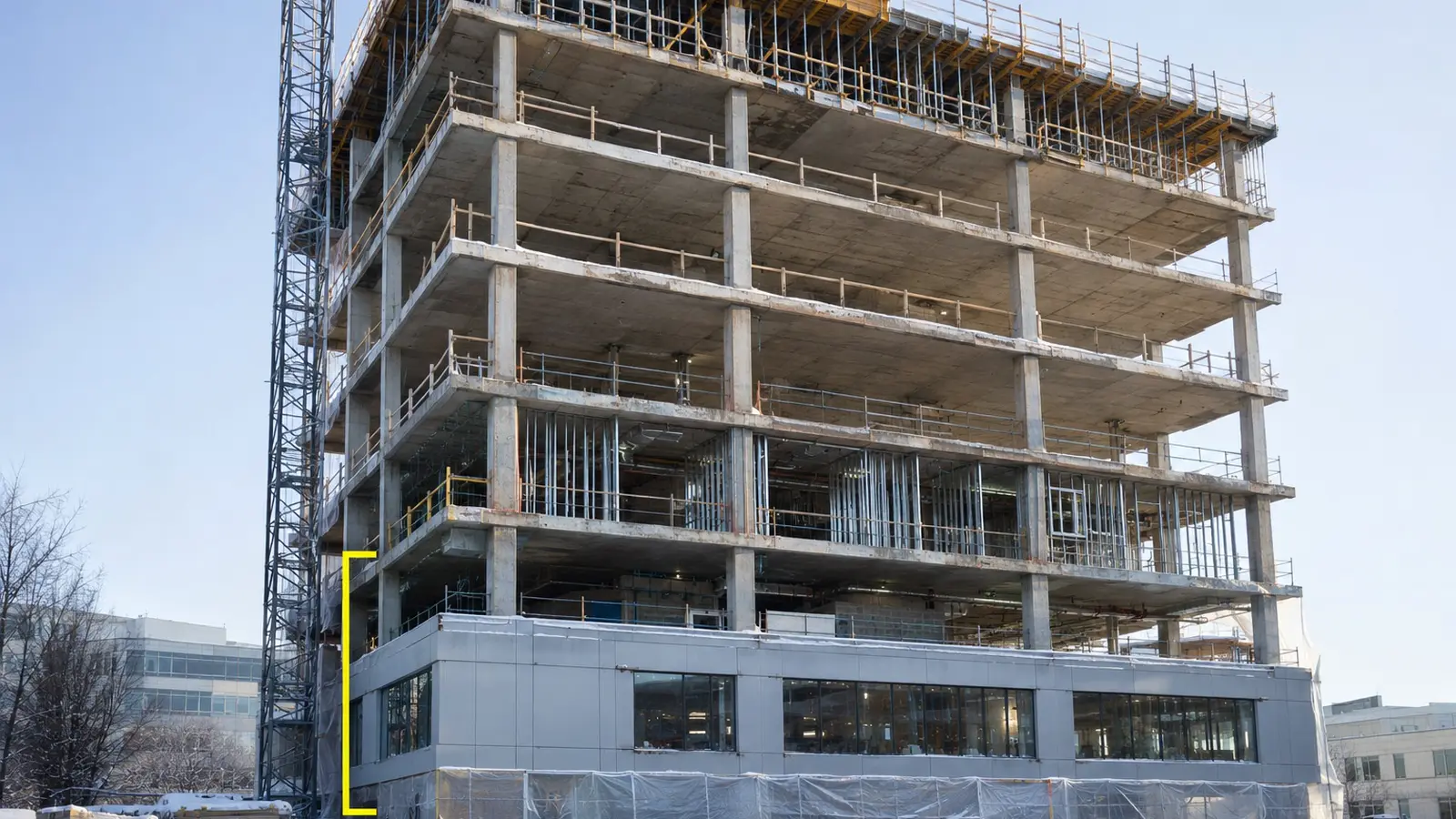
Once zones are defined, each trade moves through them in the same order and, ideally, at the same pace. Planners call this location-based or takt planning: trades follow each other like carriages of a train, with a fixed interval between them. When a trade is slower than the rhythm, the zone behind it backs up; when it is faster, it catches the trade in front and the two crews end up working on top of each other.
Protect the hand-offs
The gap between trades is a buffer. Keep it visible rather than hidden in individual durations, so that the team can see how much slack exists before a delay spreads. Hand-offs between trades are where most sequence problems start, and our guide to construction coordination covers how to run them week by week.
A typical internal fit-out sequence for one zone looks like this. The exact order varies with the building, but the readiness test at each step is what matters.
| Stage | Trades involved | Must be true before the next stage starts |
|---|---|---|
| Set out and first fix structure | Setting out, partition framing | Grid and levels checked; frame aligned to drawings |
| High-level services | Ductwork, pipework, sprinklers, cable containment | Brackets and supports installed; clashes resolved |
| First fix in walls | Electrical, plumbing, data | Wall frames complete; sleeves and backing boards fitted |
| Testing and close-up inspection | Services testers, inspector | Pressure and continuity tests passed; open walls recorded |
| Boarding and ceilings | Drylining, ceiling fixers | Inspection signed off; fire stopping complete at penetrations |
| Taping, finishes and second fix | Decorators, electricians, plumbers, joiners | Surfaces dry and sound; fittings on site |
| Final clean and snag | Cleaners, all trades | Every item from earlier stages closed |
Releasing areas only when they are ready
A zone that is ready for work and left empty is capacity the project cannot get back. A zone released before it is ready is worse, because the trade will either stand idle or start, stop and leave work unfinished. Both waste the same thing: the time between when an area could be productive and when it actually is.
A readiness checklist for every hand-off
Agree, for each major hand-off, what "ready" means. Most checklists cover the same ground:
- Preceding work complete in that zone, not just mostly complete.
- Inspections passed and recorded, where the next activity will cover the work.
- Materials delivered or confirmed for delivery before the crew needs them.
- Information available: current drawings, resolved queries and approved samples.
- Access, power, lighting and temporary services in place.
- The area clean and clear of the previous trade's equipment and waste.
Look ahead for ready areas, not just late ones
Weekly planning usually focuses on what is behind. It is just as useful to ask which zones are ready, or about to be, and whether a crew is booked for them. When one area is blocked by a late delivery or a failed test, a list of other ready zones lets the foreman move the crew instead of sending it home. That list only works if it is built from the current state of the site rather than last week's report.
When work goes out of sequence
Work goes out of order on every project. Sometimes it is a sound decision: starting second fix electrics in a finished zone while ceilings catch up elsewhere can recover a week. More often it is drift, where a crew starts whatever is open to keep busy, or skips an item that is waiting for a part.
The difference between the two is whether anyone decided.
| Deliberate resequencing | Sequence drift | |
|---|---|---|
| Who decides | Project manager with the affected trades | A crew, on the day |
| What is recorded | The change, the reason and the knock-on effects | Usually nothing |
| Effect on following trades | Planned for: they know which zones to expect | Discovered when they arrive |
| Unfinished items | Listed with an owner and a return date | Found later, often after the area is covered |
| Effect on the programme | Can recover time | Usually costs time later |
Before approving a change to the sequence, ask four questions. Does it break any hard logic? Which trades downstream are affected, and do they know? What will be left incomplete, and who will finish it? How will we confirm the out-of-order work was done to standard before the area is closed?
Experienced project managers change the sequence regularly, and a rigid plan that ignores what is happening on site is its own risk. The aim is not to forbid resequencing but to make every change visible.
Unfinished work and return visits
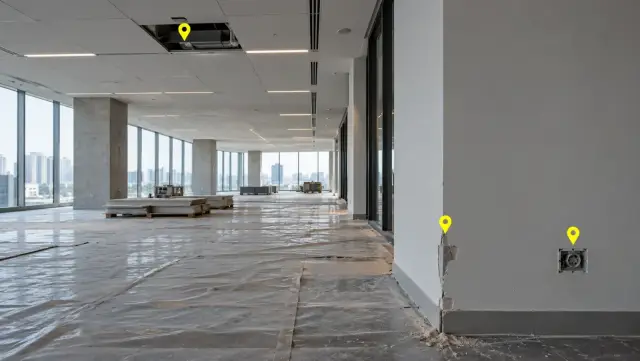
The most common way a sequence breaks down is not a dramatic change of order but a small amount of work left behind. A trade completes nearly all of a zone and moves on, intending to come back for a missing valve, a few sockets waiting for a revised drawing or a door frame that arrived damaged.
Why small leftovers become large delays
Each item looks trivial, but it blocks the work that depends on it. A ceiling cannot close over an untested pipe run, so the ceiling fixers skip that bay, and then the decorators skip it too. One missing item creates several separate return visits, each with its own remobilisation, access equipment and protection of finished work. Rework and repeat visits are also periods when work is done out of its normal context, with other trades nearby, which brings its own safety risk. The wider causes of rework, and ways to prevent it, are set out in how to reduce rework in construction.
How to control it
- Make "finish before you move" the default. A crew leaves a zone only when its scope there is complete, or when an exception has been agreed.
- Log every exception with the zone, the item, the reason, the responsible trade and a return date.
- Decide whether the next trade can proceed around the gap or must wait, and tell them before they arrive.
- Review the log weekly alongside the lookahead, so return visits are planned rather than urgent.
- Close items with evidence, such as a dated photo or capture of the completed work, before the area is covered.
Left until the end of the project, these items turn into a snag list that is far harder to clear. The construction punch list guide covers closeout, but the cheapest punch item is one that never reaches it.
Checking the sequence on site
A plan describes the intended order. To manage it, the team needs to know the actual order: which zones each trade has finished, where work started early, and what was left behind. Weekly reports and conversations give part of that picture, but they rely on memory and they rarely record what is missing.
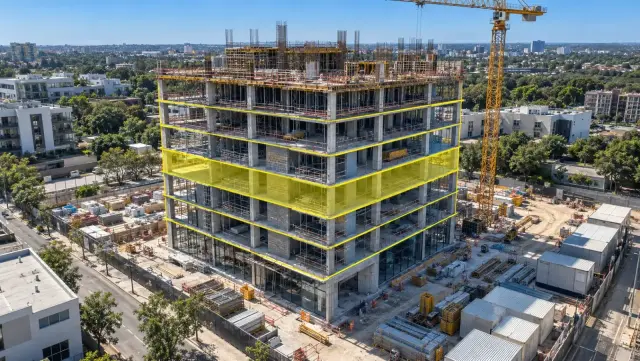
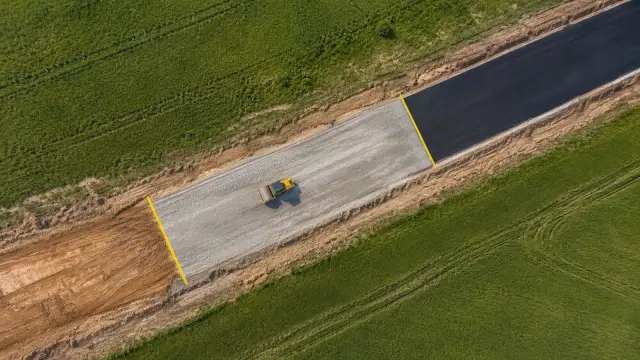
Regular, dated capture of every active zone closes the gap. Construct IQ combines drone flights for the external frame and site-wide context, 360° walks for interiors and fixed cameras for zones that need continuous attention. Every capture sits in DEX on one timeline, so a project manager can compare a zone this week with last week and with the planned schedule in 4D. Unfinished items can be pinned to the exact spot in the capture where they were found, which removes any argument about which socket or valve is meant. Because the history runs day by day, it also shows when a zone was really released and what it looked like at that moment.
| Sequencing question | What to look at |
|---|---|
| Is this zone ready for the next trade? | The latest 360° walk of the zone against the readiness checklist |
| Has a trade moved on with items left behind? | Two consecutive captures of the zone, compared item by item |
| Did work start out of order? | The capture history against the 4D programme |
| Has a critical zone stopped? | A fixed camera with an alert when activity stops |
| What was the condition at hand-off? | The capture dated at release |
Fit-out is where this matters most, because that is where the most trades share each floor. When the team in our interior fit-out use case switched to walkable 360° records, time spent coordinating fell by 70 per cent, the snag cycle ran five times quicker, and site staff did the capturing without a specialist. Where a zone needs watching continuously, fixed-camera construction monitoring deployments have cut the number of trips to site by up to 80 per cent. For the frame and external works, the aerial progress capture use case shows weekly drone flights giving each site manager back over 15 hours of reporting time every week.
None of this replaces the foreman's judgement about when to change the order. It means that judgement is made from the current state of the site.
Sequencing checklist
- Separate hard and soft logic in the programme, so recovery options are clear.
- Divide the building into repeatable zones and set the order trades will move through them.
- Keep buffers between trades visible, not hidden in individual durations.
- Agree a readiness checklist for each major hand-off and release zones against it.
- Each week, list zones that are ready and check a crew is booked for them.
- Treat any change to the order as a decision with an owner and a note of the knock-on effects.
- Log every item left behind with a responsible trade and return date, and review it with the lookahead.
- Capture every active zone on a fixed routine, so readiness and leftovers are checked against evidence.