
Key takeaways
- The Question: How do construction lenders check work before releasing loan funds, and what can borrowers and lenders do to make draw inspections faster and fairer?
- The Answer: Before each draw, a lender's inspector compares the work and materials claimed against what is on site, and checks that the remaining budget still covers the cost to finish. Draws are cut or delayed when claims run ahead of the evidence, so dated, located records of the work are the best way to shorten the cycle.
- The YelloSKYE Angle: Construct IQ produces dated drone, 360° and fixed-camera records timed to the claim cut-off, so the inspector, the owner and the contractor review the same evidence.
A construction draw inspection is the check a lender carries out before releasing each instalment, or draw, of a construction loan. An inspector confirms that the work and materials listed in the draw request are really in place, reports on progress and any concerns, and recommends how much should be funded. The terms differ by market: you may hear drawdown inspection, progress inspection, loan monitoring or a monitoring surveyor's report, but the purpose is the same. At YelloSKYE we support this process with Construct IQ, which gives everyone involved the same dated record of the site.
This guide explains the process from the lender's side. If you are a contractor looking at how claims to an owner are built and assessed, our guide to construction progress billing covers that cycle.
Why lenders inspect before they pay
A construction loan is unusual because the security does not exist yet. On day one the lender is financing land and a set of drawings. The building that will eventually secure the loan is created month by month, paid for with the lender's money.
That creates two risks the draw process is designed to manage:
- Paying ahead of the work. If funds are released for work that has not been done, the lender has less security than it thinks and the borrower has less money left to finish.
- Running out before the end. If costs rise or the budget was optimistic, the loan may be spent before the building is complete, leaving an unfinished asset that is hard to sell or refinance.
Each inspection answers both: is the claimed work in place, and is the project still fundable to completion?
Who is involved
Draw inspections sit inside a wider set of roles. Who does what varies between lenders, loan sizes and countries, but the pattern below is common.
| Role | Works for | Main job in the draw process |
|---|---|---|
| Draw inspector | Lender | Visits site, estimates percentage complete by budget line, notes stored materials and concerns |
| Lender's technical adviser or monitoring surveyor | Lender | Reviews budget, schedule, contracts, changes and risks in depth, often on larger loans |
| Borrower | Itself | Prepares and certifies the draw request and supporting documents |
| Main contractor | Borrower | Supplies the payment application, invoices and evidence of work |
| Owner's representative or cost consultant | Borrower | Checks the contractor's application before it goes to the lender |
| Lender's construction loan administrator | Lender | Assembles the package, applies retention and releases funds |
On smaller loans a single inspector may do everything on the site side. On large developments the lender usually appoints a technical adviser at the start, who reviews the budget and programme before the loan closes and then reports each month.
How a draw cycle runs
1. The borrower submits a draw request
The request lists the amount claimed against each line of the lender's approved budget. Hard costs, such as the building work itself, are normally backed by the contractor's payment application. Soft costs, such as design fees, permits and interest, are backed by invoices. Depending on the market, the package may also include evidence that subcontractors and suppliers have been paid, such as lien waivers in the US.
2. The inspector visits site
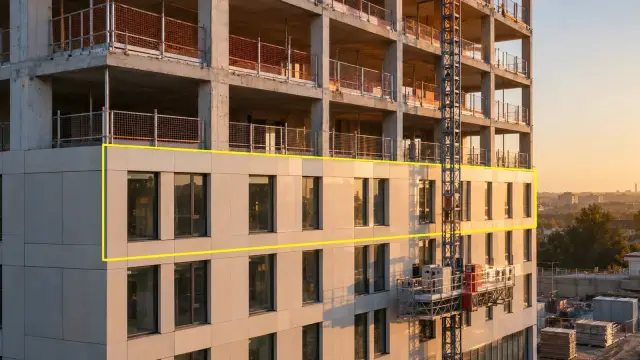
The inspector walks the project with the borrower's or contractor's representative, compares visible progress with each budget line and photographs the work. Stored materials are checked for quantity, condition and security.
3. The inspector reports
The report gives an opinion of percentage complete for each line, the amount the inspector supports, and any concerns: quality, safety, slow progress, unapproved changes or a forecast completion date that has moved.
4. The lender reconciles and funds
The lender compares the claim with the inspector's figures, applies retention where the loan requires it, checks documents and any title or legal conditions, and releases the supported amount. Differences are usually carried to the next draw rather than lost.
What the inspector checks
| Item | What good evidence looks like | Common problem |
|---|---|---|
| Work in place | Visible, measurable progress matching each budget line | Lines claimed at a higher percentage than the site shows |
| Stored materials on site | Delivery notes, photos, secure storage | Materials claimed before delivery or left unprotected |
| Stored materials off site | Proof of ownership, insurance and identification at the store | Goods not clearly set aside for this project |
| Changes | Approved change orders reflected in the budget | Work on changes the lender has not accepted |
| Schedule | Progress consistent with the completion date | A slipping programme that threatens the loan term |
| Quality and safety | No visible defects or hazards that could affect value | Problems noticed but not reported to the lender |
| Budget balance | Remaining funds cover the cost to complete | Contingency used up early in the project |
The balance test
One of the most important checks is not about this month at all. Lenders want the loan to stay "in balance": the undisbursed loan plus any equity still to be contributed must be enough to pay for everything left to build. If the inspector's cost to complete is higher than the money available, the lender may ask the borrower to put in more equity before funding the draw. Spotting this early, while there is still time to act, is one of the main benefits of a regular inspection.
Why draws get cut or delayed
Most reductions trace back to a gap between what was claimed and what could be verified on the day.
Front-loaded budgets
If early items such as mobilisation, preliminaries or foundations carry more value than their real cost, early draws look generous and later ones fall short. Inspectors watch for this and may hold back funds to protect the balance.
Claims made on expectation
A claim prepared a week before the inspection often assumes work that has not happened yet. If the inspector visits before it is done, that value moves to the next draw.
Work hidden before the visit
Services in walls, waterproofing below slabs and reinforcement before a pour are hard to verify once covered. Without dated records from before concealment, the inspector has to rely on the contractor's word or on testing.
Missing paperwork
An unsigned waiver, a missing invoice or a change order without lender approval can hold up an otherwise sound draw.
Timing and access
Inspection slots can be scarce. A visit booked late, or a site that cannot be safely accessed on the day, pushes the whole cycle back.
Using visual site records to support the inspection
Physical inspections will remain part of construction lending, but a dated visual record changes what the inspector has to establish on site. Instead of reconstructing the month from memory and a short walk, the inspector can review what happened between visits and use the site visit to check the items that matter.
| Capture | What it shows the lender | When to time it |
|---|---|---|
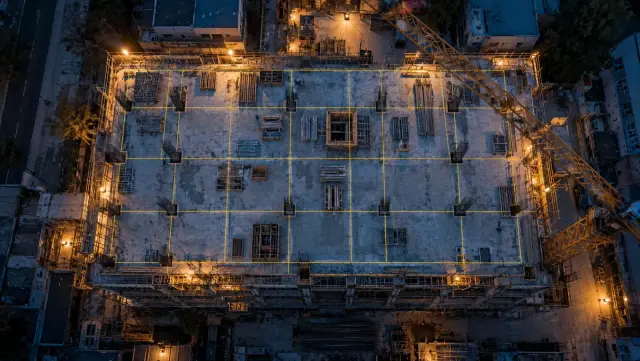
| Drone survey | Site-wide progress, structure, external works, measured earthwork volumes | Just before each draw cut-off |
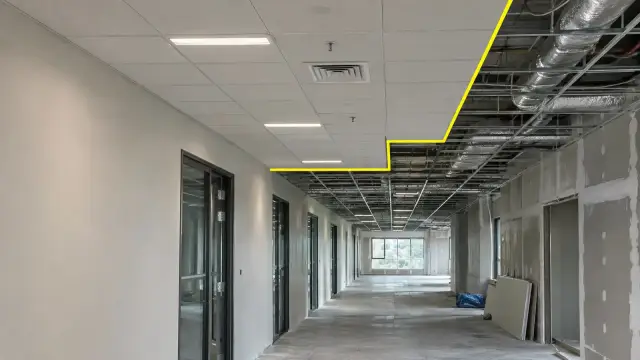
| 360° walkthrough | Interior progress, services before they are concealed, stored materials | Before close-up of walls and ceilings, and at each cut-off |
| Fixed camera | Activity between visits, deliveries, when work started and stopped | Continuous |
| Laser scan | Precise geometry where value depends on it | At key structural stages |
For earthworks, a drone survey can measure cut and fill directly rather than relying on an estimated percentage. In our earthwork volumetric analytics use case, volumes from drone surveys replaced estimates and ended monthly disputes over quantities. For buildings, scheduling drone flights to fall on the claim cut-off means the contractor, owner and lender review one shared record of progress. Our contractor billing dispute use case describes that workflow, with 80% fewer site visits needed for verification.
The same evidence supports the monthly position the lender reads. Our construction progress report guide covers what that report should contain and how to make it credible.
What remote evidence does not replace
Visual records support judgement; they do not replace it. The inspector still decides how a budget line translates into a percentage, whether materials are acceptable and whether the cost to complete is realistic. Lenders also set their own rules on how often a physical visit is required, and those rules apply regardless of the evidence available.
Setting up the process at loan closing
The cheapest time to make draw inspections run smoothly is before the first one.
- Agree the budget structure. Align the lender's budget lines with the contractor's schedule of values so each claim maps cleanly onto the loan.
- Fix cut-off and inspection dates. A predictable monthly rhythm gives the contractor, owner's team and inspector time to prepare.
- Write evidence requirements into the documents. Specify dated captures at each cut-off and before concealment, with the location of each record. Our guide to owner reality capture standards explains how to write capture requirements that apply across contractors.
- Give the inspector access to the record. Read-only access to the project's visual record lets the inspector prepare before visiting.
- Agree the treatment of stored materials. Decide in advance what proof is needed for materials on site and off site.
Checklist for borrowers and lenders
- Lender's budget lines mapped to the contractor's schedule of values.
- Monthly cut-off date and inspection window agreed and published.
- Draw request template with required supporting documents listed.
- Capture scheduled just before each cut-off: drone for site-wide progress, 360° for interiors.
- Records of work before concealment kept, dated and located.
- Stored materials photographed on arrival, with delivery notes filed.
- Change orders submitted to the lender before the work is claimed.
- Cost to complete reviewed each month against funds available.
- Inspector given access to the visual record ahead of each visit.
- Reductions and their reasons logged, so carried-forward amounts are claimed correctly next time.