Construction Dispute Documentation: What to Record, How, and Why It Holds Up
By Kush Agarwal, President and CEO, YelloSKYE. Published .
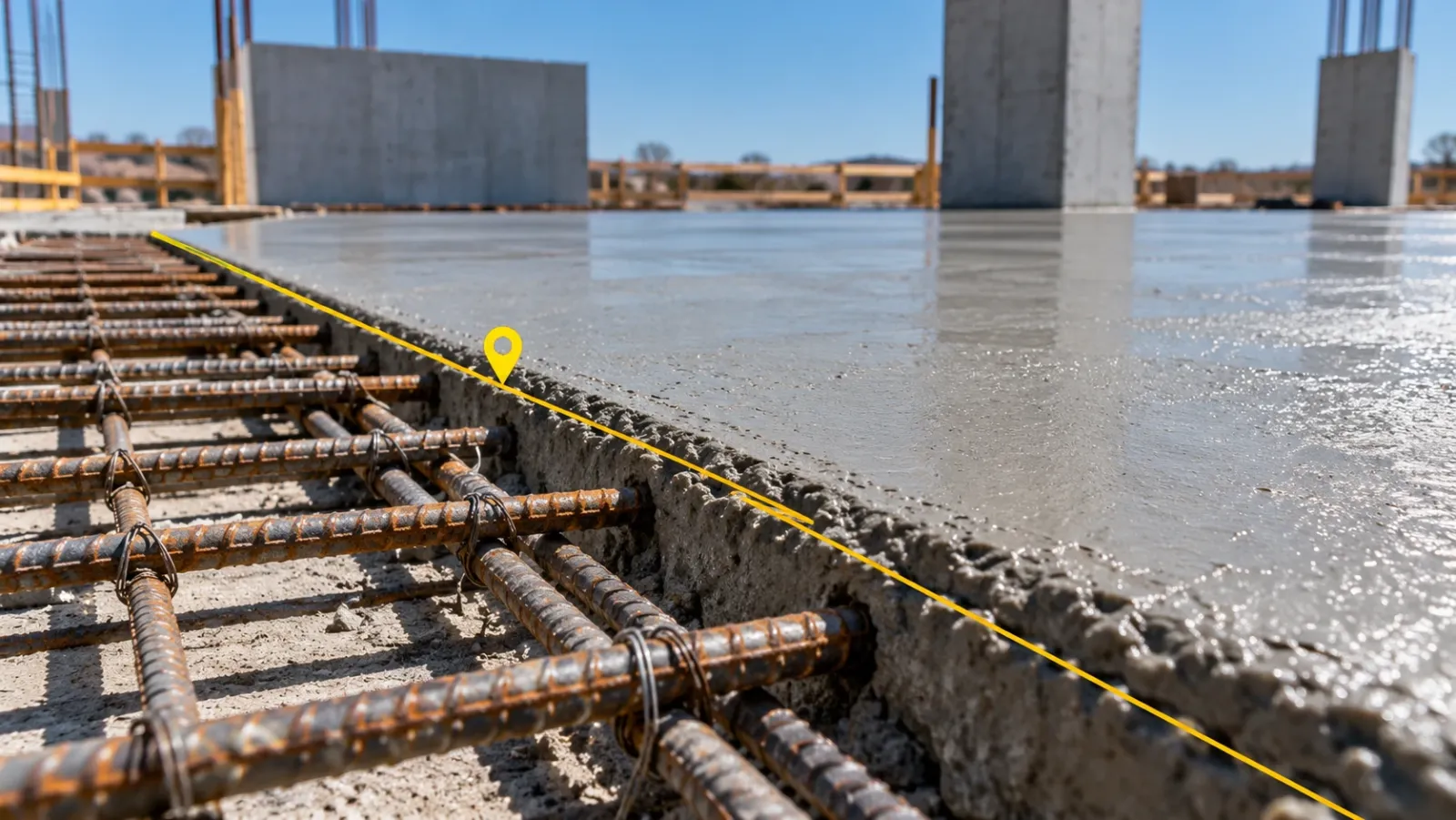
Executive Summary
- The Question: What documentation actually protects a developer, EPC or contractor when a construction dispute starts?
- The Answer: A record that was made at the time, shows exactly where and when each condition existed, covers the whole site on a fixed rhythm, and cannot be quietly altered afterwards. Most photo folders and progress reports fail at least one of those tests.
- The YelloSKYE Angle: Construct IQ combines drones, 360° cameras and fixed cameras, with laser scanning through BIM IQ where precise geometry matters, into one dated, location-referenced record on the DEX platform, so every stakeholder argues from the same evidence.
What construction dispute documentation needs to prove
Construction dispute documentation is the set of records that shows what was built, where, when and in what condition, made at the time the work happened rather than reconstructed afterwards. The records that hold up are dated, located, complete across the site and kept somewhere no one can edit them later.
Most construction disputes are not really about the law. They are arguments about facts: whether a slab was cast before the billing date, whether the incoming contractor inherited finished or unfinished work, whether a damaged façade panel was damaged before or after the scaffolding came down. Whoever can show the fact settles the argument. That is the job of Construct IQ, YelloSKYE's construction monitoring solution, and it is the lens for this guide.
This guide covers why everyday site records fall apart under scrutiny, the tests a dispute-ready record must pass, what to capture at each stage of a project, which capture method suits which dispute, and how to set up a routine that keeps working when the schedule gets tight.
Why everyday site records fall apart in a dispute
On most projects, documentation already exists. The trouble is its quality once someone challenges it.
Progress lives in WhatsApp groups, email threads, spreadsheets and verbal updates at the site office. Photos are taken on personal phones, from whatever angle was convenient, and saved without any reference to the drawing. Daily progress reports describe work in words that two parties can read two different ways. By the time a disagreement surfaces, often months later at a payment claim or a handover, the person who took the photo may have left the project.
Three weaknesses show up again and again:
- No reliable time. A photo without a trustworthy date proves that something existed at some point. In a delay or billing dispute, the date is the whole argument.
- No reliable place. A close-up of a cracked beam is useless if no one can say which beam, on which floor, in which tower.
- Gaps in coverage. People photograph what looks interesting or problematic. The area that later becomes contested is usually the one nobody thought to capture.
The work may have been done correctly. Without a record that answers "where, when and how do we know", it can still lose the argument, or at least turn a two-week conversation into a year-long one.
Six tests a dispute-ready record must pass
Before choosing tools, it helps to be clear about what makes a record defensible. Each test below answers a question the other side will ask.
| Test | The question it answers | What a weak record looks like | What a strong record looks like |
|---|---|---|---|
| Contemporaneous | Was this made at the time? | Photos gathered after the dispute begins | Captures made on a schedule during the work |
| Dated | When exactly did this condition exist? | Phone timestamps that can be edited or are missing | System-generated date on every capture |
| Located | Where on the project is this? | Close-ups with no reference to the drawing | Imagery referenced to a map, plan or chainage |
| Complete | What about the area next to it? | Selective shots of chosen spots | Whole-site or whole-floor coverage on every capture |
| Continuous | What did it look like before and after? | One-off snapshots | A repeatable series you can compare date to date |
| Unaltered and shared | Has anyone changed this, and does everyone see the same thing? | Files on personal phones and drives | Central, access-controlled platform with logged history |
A record that passes all six does not need someone to vouch for it. That is the practical difference between evidence and an anecdote.
What to document at each stage of a project
Disputes cluster around predictable moments: before work is covered up, when one contractor hands over to another, at billing milestones and at final handover. Plan documentation around those moments, not only around calendar dates.
| Project stage | What to capture | Why it matters in a dispute |
|---|---|---|
| Pre-construction and site handover | Existing ground levels, boundaries, access roads, neighbouring structures | Baseline for earthwork quantities, boundary claims and third-party damage |
| Earthwork and foundations | Cut and fill surfaces, stockpiles, excavation depths before backfill | Quantity disputes and payment for earthwork measured by volume |
| Structure | Each floor or segment before and after pours, reinforcement before concrete | Proof of what sits inside the structure, and when each pour happened |
| MEP and services | Conduits, ducts and pipes before walls and ceilings close | Defect and rework claims once services are hidden |
| Contractor changeover | Full coverage of the outgoing contractor's work on the changeover date | Clear split of scope, liability and payment between packages |
| Billing milestones | Site-wide capture aligned with each payment cut-off | Verifying percentage progress claimed against physical work in place |
| Handover and defect liability | Complete as-built condition of every area | Snag disputes, post-handover damage and operator claims |
The "before it gets covered" moments deserve special attention. Once a slab is poured or a false ceiling is fixed, there is no second chance to record what is underneath.
Matching the capture method to the dispute
No single sensor answers every question. Each capture method is suited to a different kind of proof, which is why YelloSKYE works across several of them.
| Capture method | What it proves best | Typical disputes it supports |
|---|---|---|
| Drone survey | Site-wide progress, earthwork volumes, external works, linear progress by chainage | payment claim verification, quantity disputes, delay claims on large or linear sites |
| 360° camera walk | Interior condition room by room, services before close-up | Defects, MEP rework, scope at contractor changeover, handover snags |
| Fixed camera | Continuous activity from the same viewpoint, day after day | Delay and stoppage claims, milestone dates, site activity on specific days |
| Laser scanning | Precise geometry and as-built dimensions | Deviation from design, tolerance and fit disputes, as-built versus BIM |
On a residential tower, that might mean periodic drone flights for the structure and external development, weekly 360° walks inside each floor, and fixed cameras on the tower faces and main access gate. On a highway or pipeline, drone captures referenced to chainage carry most of the load, as the dashboard in the image above shows for a road project tracked activity by activity.
Common dispute types and the evidence that settles them
Payment and quantity disputes
The most frequent argument on any project is over how much work is actually in place at a billing cut-off. When drone captures are timed to the billing cycle, the owner or project manager can check claimed progress against the physical site rather than against a description of it. Construct IQ supports contractor billing verification against drone capture without manual resurveys, and the contractor billing disputes use-case shows this workflow cutting site visits for verification by 80%.
Earthwork and quantity disputes
Volumes of cut, fill and stockpiles are easy to argue over and hard to re-measure once the ground has moved. Repeat drone surveys produce cut-and-fill calculations for each period, giving both sides the same number from the same surface. The earthwork volumetric analytics use-case covers how EPCs use this to move earthwork billing onto objective data.
Scope disputes at contractor changeover
When a package changes hands mid-project, the incoming contractor will want to be clear about what they inherited, and the outgoing one about what they finished. A full capture on the changeover date, viewed by both parties, draws that line before anyone has a reason to blur it.
Variations and change orders
Variations usually start with a condition on site: an obstruction, a design change, a site instruction. A dated record of the condition that triggered the change, and of the work that followed, keeps the claim tied to facts rather than to memory of a conversation.
Delay, extension of time and liquidated damages
Delay claims depend on showing what happened on which days. Construct IQ's progress-versus-plan overlay compares actual execution with the planned schedule, and fixed cameras add a continuous record of activity, including stoppages. Together they show cause and effect, which matters whether you are claiming an extension of time or defending against liquidated damages. The time-lapse monitoring use-case describes how fixed cameras build a 24/7 visual site record from early works to handover.
Damage, defects and handover
Damage attribution between trades, and snag disputes at handover, both come down to "what did it look like, and when". A room-by-room 360° record before and after each trade, and a complete record at handover, answers that directly. In the warehouse handover use-case, a developer used a visual archive hosted on DEX to give the incoming operator role-based access to the build history, with zero post-handover documentation disputes reported.
Setting up a documentation routine that holds
A record only protects you if it exists before the argument. Most documentation plans fail in the first few weeks because they rely on someone remembering to do extra work. These habits keep it going.
Fix the rhythm to something that already happens
Align drone captures with payment cycles and monthly reviews. Tie 360° walks to the weekly progress meeting. Let fixed cameras run continuously. When capture is part of an existing meeting or cycle, it does not get skipped.
Capture before every cover-up
Make "capture before closing" a hold point, the same way inspections are. No pour, plaster or ceiling should proceed until the area has been recorded.
Give it an owner
Documentation needs a named role, whether on the site team, with the project manager or through a capture partner. Without ownership, it is the first task dropped when the schedule tightens, which is usually just before a contested condition disappears.
Keep it in one place, with controlled access
Records scattered across phones and drives are hard to produce and easy to dispute. A single platform where the owner, contractor and project manager see the same imagery, with role-based access and a logged history, removes the "my version versus your version" argument.
Link visuals to the paper trail
Meeting minutes, site instructions, inspection reports and issue logs still matter. Tagging an issue directly on the site visual, at the exact location it refers to, ties the written record to the physical condition.
Plan for retention
Keep the full record at least through the defect liability period and for as long as your contract and the applicable law allow a claim. Confirm retention periods with your legal counsel; this guide is general guidance, not legal advice.
How Construct IQ and DEX support dispute-ready records
YelloSKYE's approach is to capture the physical site with the right mix of sensors and keep the result as one shared, dated record. Within Construct IQ and the DEX platform, that includes:
- Multi-sensor capture: drone surveys, 360° interior scans and fixed cameras, with laser scanning available through BIM IQ, combined so that site-wide, interior and continuous views sit in one record.
- Time Travel Playback: scroll through site history day by day to show what was built and when.
- Geo-referenced annotations: tag issues directly on site visuals so contractors see exactly where and what needs attention.
- Progress versus plan: compare actual execution with the planned schedule to identify deviations early.
- Volume and earthwork analytics: cut-and-fill calculations from drone surveys, with measurements of distance, area and volume taken from the desk.
- Audit-grade proof: DEX keeps immutable logs designed for dispute resolution, with stakeholder dashboards so site teams, PMOs and clients review the same reality.
- Existing workflows: integration with Procore, Autodesk BIM 360 and ACC, so the visual record sits alongside the project management system rather than apart from it.
Most projects are set up and first captured within 48 to 72 hours, which means the record can start before the next billing cycle rather than after the first disagreement.
The cheapest dispute is the one that never becomes a claim. When every party reviews the same dated, located record at each billing cycle and handover, most disagreements are settled at the table, in days rather than months.
Frequently asked questions
What documents are needed to support a construction dispute or claim?
The core set is the contract and its variations, approved drawings, daily progress reports, payment applications and measurement records, correspondence and meeting minutes, and a dated visual record of the site. The visual record matters because it is what ties every other document to the physical condition it describes. Records made at the time of the event carry far more weight than anything reconstructed later.
Are site photos accepted as evidence in construction arbitration?
Photos and other visual records are commonly relied on in arbitration and negotiation, but their weight depends on whether the date, location and authorship can be shown, and on the rules of the forum. A loose phone photo with no reliable timestamp or location is easy to challenge. Treat this as general guidance and confirm specifics with your legal counsel.
How often should a construction site be documented to protect against disputes?
Set a fixed rhythm rather than capturing only when something looks wrong. Many teams align aerial captures with payment cycles, run interior 360° walks weekly during active work, and capture before any element is covered up, such as a slab pour or a wall closure. Fixed cameras add a continuous record between those visits.
How long should construction site records be kept?
Keep them at least as long as your contract and the applicable law leave you open to a claim, which usually runs well beyond handover and through any defect liability period. Cloud-hosted visual records make long retention practical because nothing needs physical storage. Confirm the exact period with your legal counsel.
Can a visual site record prevent disputes rather than just win them?
Yes, and that is where most of the value lies. When the contractor, project manager and owner all review the same dated record, disagreements over progress, scope or damage are usually settled in the review meeting instead of escalating into a formal claim.