
Key takeaways
- The Question: What actually causes construction delays, how do you tell which causes are hurting your own project, and what prevents each one?
- The Answer: Delays come from five places: the owner, the contractor, the design, the supply chain and the outside world. Most of the lost time starts inside the project team, grows quietly as small slips use up float, and is found too late. Tag every slip with its cause, check pace rather than percentages, and match the prevention to the cause.
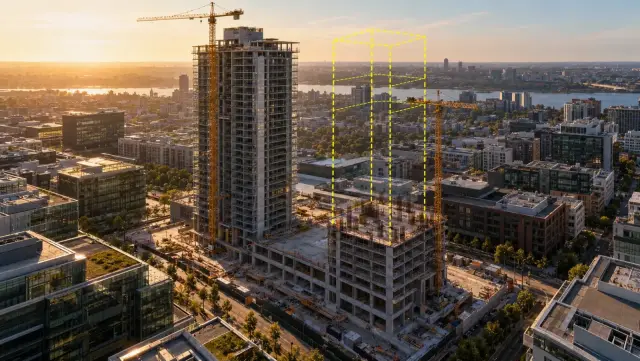
- The YelloSKYE Angle: Construct IQ keeps a dated visual record of the site and compares it with the 4D schedule, so a stalled zone or out-of-sequence work shows up while there is still time to act.
Construction delays come from five families of cause: decisions and changes from the owner, planning and resourcing by the contractor, gaps in the design, failures in the supply of materials, plant and labour, and events outside the project such as weather or ground conditions. On most projects the first three do more damage than the last two, because they are frequent, they interact, and nobody notices them until several have stacked up.
This guide works through each family, explains how small misses turn into months, and gives a practical way to diagnose which causes are hitting your project and how to prevent them. If you want the research figures on how often projects run late, see our construction delay statistics guide. Here the focus is on cause and cure. Throughout, we show where a visual site record from Construct IQ helps and where it does not.
The five families of delay at a glance
| Family | Typical causes | Who usually carries the time risk | Earliest sign on site |
|---|---|---|---|
| Owner | Late approvals, scope changes, late access or permits the owner must obtain, slow payment | Owner, so the contractor normally gets more time | Crews waiting on an instruction; areas handed over late |
| Contractor | Optimistic programme, poor sequencing, too few crews, weak subcontractors, rework | Contractor | Zones that start but do not close; trades crowding the same floor |
| Design | Incomplete drawings at tender, slow answers to site queries, clashes between disciplines | Usually the owner, depending on who holds design responsibility | Work stopping at the same detail on several floors |
| Supply chain | Long-lead equipment, material shortages, plant breakdowns, labour availability | Usually the contractor, unless the owner nominated the supplier | Empty laydown areas; a trade on site without its materials |
| External | Extreme weather, unexpected ground, utility diversions, regulator inspections | Shared, set by the contract's risk allocation | Visible straight away, which is why these get the most attention |
How the time and cost are shared depends on the contract and on the law where the project sits. The same event can be the owner's risk under one standard form and neutral under another, so check your own contract before deciding who pays.
Owner-side causes
Decisions that take too long
Owners make dozens of decisions during construction: finish selections, design queries, variations, sample approvals. Each one has a natural deadline after which the site stops or works around it. When decisions pass through several committees, or wait for a monthly board, the site loses days on each one. The fix is a decision register with a required-by date taken from the programme, and named people allowed to decide within set limits.
Changing what is being built
Scope changes after construction starts are rarely one-off. A changed room layout alters services, finishes and sometimes structure, and it usually arrives while the affected area is already in progress. Freezing scope at clear gates, and pricing the time effect of each change before it is approved, keeps the owner aware of what a change costs in weeks as well as money.
Late access, land and permits
Where the owner must hand over land, obtain permits or arrange utility connections, any slip lands directly on the contractor's start. Treat these as programme activities with their own owners and dates, not as background tasks.
Slow payment
A contractor that is not paid on time slows down, reduces crews or delays orders. Late certification of progress payment claims is a quiet cause of delay because its effect shows up weeks later as a resourcing problem.
Contractor-side causes
Programmes built to win rather than to deliver
A programme prepared at tender is often tuned to meet the owner's date, with durations that have never been checked against how fast crews actually work. When the real pace arrives, the plan starts slipping in the first month. The common response is to re-plan with shorter durations for the remaining work, which assumes a speed-up nobody has arranged. Without a change in crews, method or sequence, the new dates fail in the same way.
Poor sequencing and trade stacking
When one trade falls behind, the trades that follow it often start anyway in whatever areas are open. Several trades then work in the same rooms, get in each other's way and leave partly finished areas behind them. Productivity drops for everyone, and the backlog of incomplete work grows.
Too few crews, or the wrong subcontractor
Under-resourcing is often a cash or availability problem disguised as a planning one. A subcontractor carrying too many jobs sends a small crew and promises more next week. Watch the size of the crew against what the plan needs, not just the subcontractor's reports.
Rework
Work that has to be taken out and rebuilt costs the time twice and often blocks the next trade. Our guide on how to reduce rework in construction covers the causes in detail.
Design and information causes
Design that was not finished at tender
Projects that start on incomplete drawings fill the gaps on site, through queries and revisions. Each revision can trigger re-ordering, re-fabrication and re-planning.
Slow answers to site queries
A request for information that sits unanswered for two weeks stops the affected work, and crews either wait or move to other areas out of sequence. Ageing of open queries is one of the most useful delay indicators you can track.
Clashes found on site instead of in the model
When ducts, pipes and structure meet in the same space, the problem is cheap to fix in a coordinated model and expensive once installed. Comparing as-built conditions against the design catches deviations before the next trade covers them, as in our as-built vs BIM clash detection use case.
Supply chain causes
Long-lead items such as switchgear, lifts, chillers and façade panels need ordering months ahead, often before design is final. A late order is invisible until the installation date arrives. Material shortages, plant breakdowns and labour availability add to this. Prevention is mostly about timing: a procurement schedule tied to the construction programme, with order dates worked back from installation dates, and regular checks with suppliers on fabrication progress.
External causes
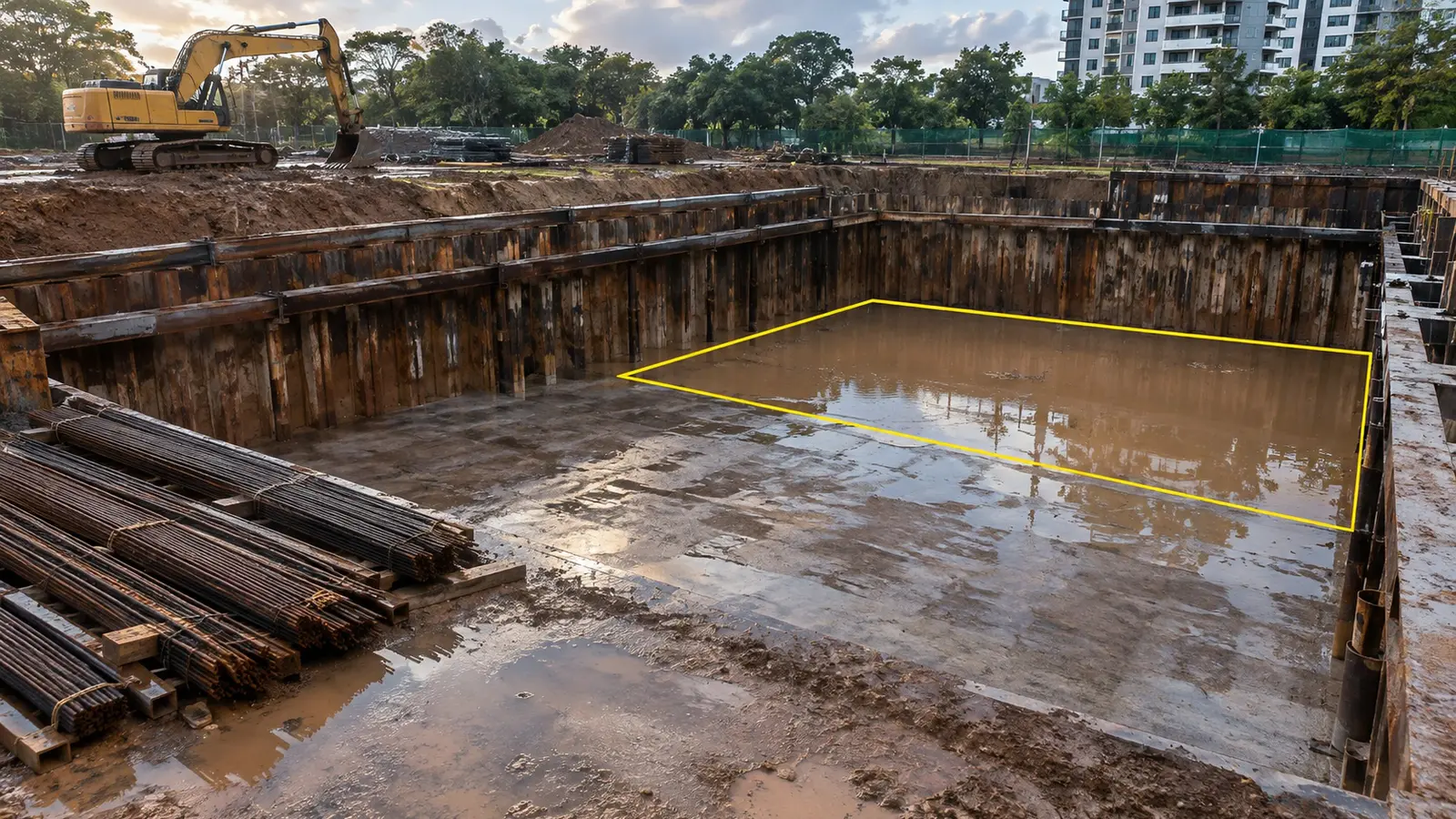
Weather, unexpected ground, buried services and inspections by authorities are the causes people quote first, and they are real. But they are also the causes contracts already expect. Programmes usually allow for normal weather, and ground risk is assigned by the contract and site investigation. The useful questions are whether the event was beyond what the programme assumed, and whether its effect was recorded at the time. Rules on what counts as an excusable event differ by country and by contract form.
How small misses compound
Few projects are delayed by one large event. Most are delayed by many small ones that interact. Three mechanisms do most of the damage.
- Float runs out quietly. Non-critical activities have spare time, so early slips appear harmless. Each one uses some of the margin, until a further small slip lands directly on the finish date.
- The late part of each activity is the slowest. The first 80 per cent of an activity often moves at a steady rate, while the remainder drags on through snags, missing items and access problems. Reports that show "nearly complete" for weeks are a sign of this.
- Re-planning hides the gap. Moving dates in the programme without changing how the work is done makes the report look better for a month and the outcome worse.
Here is an illustrative chain. A tile sample is approved three weeks late. The tiler moves to another floor to keep busy, out of the planned order. The sanitaryware fitter, following the tiler, now has half-finished bathrooms on two floors and cannot complete either. Ceiling closure in those areas waits for the sanitaryware connections. By the time the delay reaches the handover programme, the original cause is three steps back and nobody connects it to the late approval.
Diagnosing which causes are hitting your project
You cannot prevent causes you have not identified. A simple routine works on most projects.
- Tag every slipped activity with a cause. Use a short, fixed list based on the five families. Free-text explanations cannot be counted.
- Ask why until you reach a decision or a constraint. "Drylining is late" is a symptom. "Drylining is late because the services above the ceiling were not signed off, because the inspection request went in late" is a cause you can act on.
- Measure pace, not just percentage. An activity at 60 per cent complete can be on track or hopeless depending on how fast it has moved in the last three weeks and how fast it needs to move now.
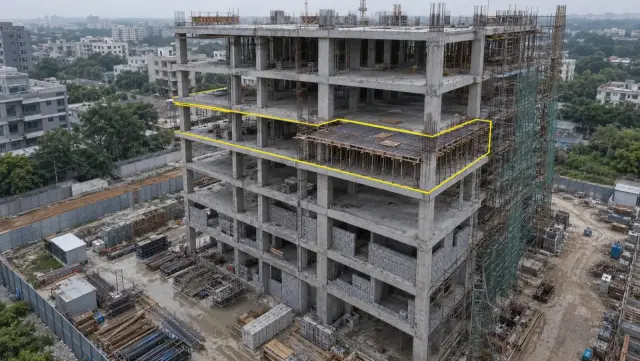
- Compare zones. If the same trade is late everywhere, look at the trade. If one area is late for every trade, look at access, information or the work before it.
- Check against the site itself. Reported progress and physical progress drift apart. Our guide to construction progress tracking challenges explains why reports become unreliable.
| What you see | Likely cause to check | Evidence that confirms it |
|---|---|---|
| Same trade behind in every zone | Crew size, subcontractor capacity, productivity | Crew counts against plan; pace by week |
| One zone behind for every trade | Late access, missing information, earlier work incomplete | Open queries for that zone; state of preceding work |
| Many areas started, few finished | Trade stacking, out-of-sequence working | Number of open work areas per trade |
| Work stopped at one detail repeatedly | Design gap or unresolved query | Query log and response times |
| Trade on site but idle | Material or plant shortage | Deliveries against need dates |
| Sudden stop across the site | External event or instruction | Dated records and correspondence |
Preventing delay, cause by cause
| Cause | Prevention during planning | Control during construction |
|---|---|---|
| Slow owner decisions | Decision register with required-by dates and delegated limits | Weekly review of decisions due in the next four weeks |
| Scope changes | Design freeze gates; time effect priced with every change | Change log linked to affected activities |
| Unrealistic programme | Durations checked against achieved rates from past jobs | Compare required pace with actual pace every week |
| Poor sequencing | Location-based plan agreed with trades | Limit open work areas per trade; finish before moving on |
| Under-resourcing | Confirm crew sizes in subcontracts | Crew counts compared with plan; escalate early |
| Incomplete design | Hold procurement until key packages are coordinated | Track query ageing; set response deadlines |
| Long-lead items | Procurement schedule worked back from install dates | Fabrication progress checks with suppliers |
| Weather and ground | Realistic allowances; site investigation | Record conditions daily; resequence to protected work |
Where a site record helps, and where it does not
A dated, objective record of the site will not make a supplier deliver on time or speed up an owner's committee. What it does is shorten the time between a cause appearing and someone with authority seeing it, and it gives everybody the same facts when deciding who owns the delay.
Construct IQ lines up each capture with the 4D schedule baseline, so zones that have stopped moving or trades working out of order become visible between progress meetings rather than at the month end. Fixed cameras watch selected zones continuously, and the platform can notify the team when activity stops in an area marked as high priority, as described in our fixed-camera construction monitoring use case. Because every capture is dated, the team can scroll back through the site history to show what was built when, which is the evidence an extension-of-time claim depends on.
Weekly drone capture also changes how teams spend their time. In our aerial progress capture use case, site managers saved more than 15 hours a week on manual reporting and stakeholder meetings fell from two hours to 30 minutes, because the discussion started from the same picture of the site.
A delay-cause checklist
- Keep a short, fixed list of cause codes and tag every slipped activity with one.
- Maintain a decision register with required-by dates taken from the programme.
- Check the programme's durations against achieved rates before you commit to them.
- Work order dates for long-lead items back from installation dates, and check them monthly.
- Track the age of every open design query and escalate past an agreed limit.
- Compare required pace with actual pace for critical activities every week.
- Limit how many areas each trade can have open at once.
- Capture the site on a regular cadence so you have dated evidence of conditions and progress.
- Review delay causes by family each month and act on the largest, not the loudest.