Construction Site Inspections: Types, What Inspectors Check and How to Record Them
By Kush Agarwal, President and CEO, YelloSKYE. Published .
Executive Summary
- The Question: What kinds of inspection happen on a construction site, what does each inspector look for, and how should the results be recorded?
- The Answer: A site sees several inspection regimes at once: safety, quality, authority, environmental, specialist testing, progress and completion. Each has a different owner and purpose, but all of them only work when the result is written down with a location, the criteria used, evidence and a named person to act.
- The YelloSKYE Angle: Construct IQ gives inspectors a dated, located visual record of the site from drones, 360° cameras and fixed cameras, so part of each inspection can be prepared and reviewed from a desk and findings can be pinned to the exact spot on the DEX platform.
Construction site inspections are planned checks of the work, the site and the way it is being run, carried out by the contractor, the owner's team, the design team, authorities and specialists at agreed points during the project. Each inspection compares what is on site with a standard, such as the drawings, the specification, a safety rule or an approval condition, and records whether it passes and what must change if it does not.
The inspection itself is rarely the weak point. Experienced inspectors notice problems. The weak point is what happens next: a finding written vaguely, without a location, with no owner and no date for checking it again. This guide explains the main inspection types, what each inspector is looking for, and how to document inspections so that findings lead to action. Along the way it shows where Construct IQ, the YelloSKYE construction monitoring solution, gives inspectors a dated site record to prepare from and follow up against.
Who inspects a construction site
A mid-sized project can have half a dozen parties inspecting it, each protecting a different interest. Confusion over who inspects what is the first thing to clear up.
| Inspector | Works for | What they are protecting |
|---|---|---|
| Supervisors and trade foremen | The contractor or subcontractor | Their own work being right first time |
| Quality manager | The main contractor | Compliance with the specification across all trades |
| Safety manager or officer | The main contractor | The people on site and the public around it |
| Owner's representative or clerk of works | The owner | Value for money and the standard the owner is paying for |
| Design team | The owner, under their appointment | Design intent and their own professional liability |
| Building authority inspector | The local or national authority | Public safety and compliance with the building regulations that apply |
| Specialist testers and commissioning engineers | The contractor or owner | Measurable performance of materials and systems |
| Insurer's surveyor or lender's monitor | An insurer, bank or investor | Risk to the policy or the loan, and progress against drawdowns |
Write these roles into the project's inspection plan at the start, with the stages each party attends. A contractor who learns in week twenty that the lender's monitor wants to see every floor before drawdown will lose time.
Types of construction site inspection
Safety and site condition inspections
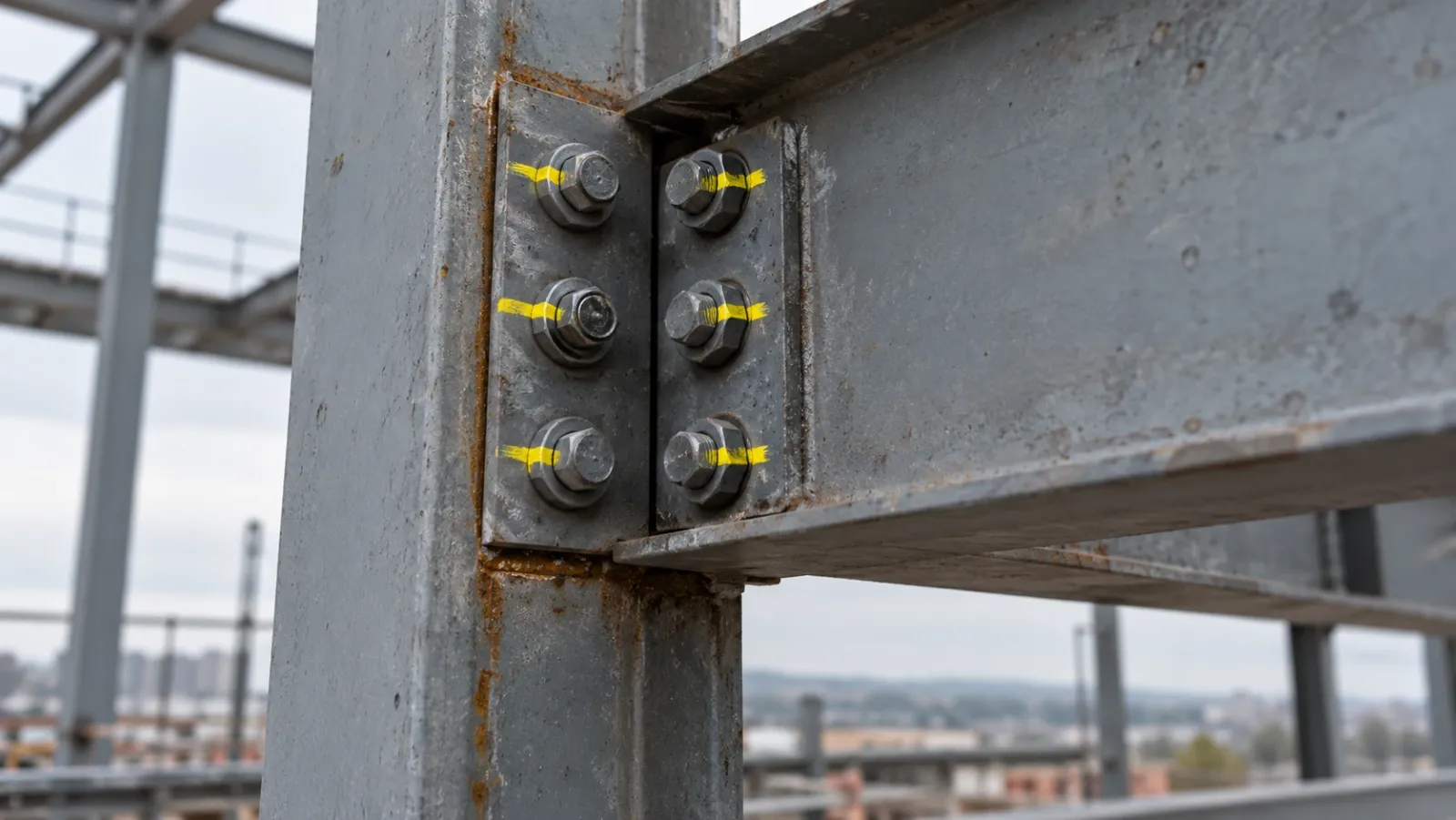
These look at how the site is being run rather than what is being built: access routes, edge protection, scaffolding, excavation support, lifting operations, electrical safety, fire precautions, housekeeping, welfare facilities and the use of protective equipment. A brief check usually happens each day, with a fuller, recorded inspection weekly and further checks after any change, such as a scaffold being altered or bad weather.
Quality and workmanship inspections
These check that each element matches the drawings, the specification and agreed tolerances before the next activity covers it. They are planned around covering events rather than calendar dates. How to place those inspection points, and the difference between hold and witness points, is explained in our guide to construction quality control.
Building authority inspections
Most jurisdictions require the building authority, or an approved inspector acting for it, to check certain stages: typically foundations, structure, drainage, fire safety measures and completion. The stages, notice periods and paperwork vary from place to place, so confirm them with the authority at the start and put them on the programme as fixed dates rather than surprises.
Environmental inspections
These cover dust, noise, vibration, water run-off, waste segregation, fuel storage and protection of trees or watercourses. Conditions attached to a planning approval often set specific limits, and a single uncontrolled discharge can stop work, so the checks need the same discipline as safety inspections.
Specialist tests and commissioning
Some things cannot be judged by eye. Concrete strength, weld quality, pipework pressure, electrical insulation, air tightness and fire alarm performance are tested and witnessed by specialists, and the results become formal certificates. The inspection record here is the test sheet, linked to the exact system or element it covers.
Progress and payment inspections
Owners, project managers and lenders inspect to confirm how much work is in place before approving a payment claim or releasing funds. These inspections are about quantity and completeness, not workmanship, and they are where a dated, site-wide record saves the most time.
Completion and handover inspections
Before the owner takes the building, the contractor and then the owner's team inspect every area for incomplete work and defects. The output is a list of items to fix, which our construction punch list guide covers from first walk to verified closure.
What inspectors look for
Experienced inspectors carry a mental list for each type of check. Writing those lists down makes inspections consistent between people and between projects.
| Inspection type | Typical checks | Common reasons for a fail |
|---|---|---|
| Safety | Edge protection, scaffold tags, excavation support, lifting plans, permits to work, fire points, protective equipment | Missing guard rails after a trade has moved them, out-of-date scaffold inspections, unsecured openings |
| Quality | Dimensions and levels, materials against approved submittals, fixings, cover to reinforcement, sealing and fire stopping | Wrong drawing revision used, unapproved substitute materials, incomplete fire stopping |
| Authority | Structural elements, drainage, fire separation, escape routes, accessibility features | Work covered before the inspection was called, missing test certificates |
| Environmental | Dust and noise controls, wheel washing, silt fences, waste skips, fuel bunding | Run-off reaching drains, mixed waste, controls removed and not reinstated |
| Progress | Quantities in place, completeness by zone, sequence against the programme | Claimed work that is started but not complete, work in areas not yet released |
| Completion | Finishes, damage, operation of fittings and equipment, cleaning, documentation | Small defects across many rooms, missing manuals and certificates |
The pattern behind most fails is timing or information, not skill. Work gets covered before the inspection was called, or the inspector and the trade were looking at different drawings.
Preparing for an inspection
A good inspection starts before anyone walks onto the site.
- Confirm the criteria. Agree which drawing revision, specification clause or approval condition the work will be judged against, and make sure the trade has the same version.
- Check the open findings. Review what was raised at the last inspection of this area and whether it has been closed.
- Gather the supporting records. Test certificates, delivery notes for materials and previous inspection results should be ready, not promised later.
- Look at the latest capture. Reviewing recent drone, 360° or fixed-camera imagery of the area shows whether it is actually ready, what has changed since the last visit, and where to spend time on site.
- Arrange access. Make sure the area is safe to enter, lit, and that ladders, keys or hoists are available.
How to document an inspection
An inspection record has to make sense to someone who was not there, possibly months later. These are the fields that make it work.
| Field | Why it matters |
|---|---|
| Reference number | Lets findings, re-inspections and certificates point back to the same record |
| Date, time and duration | Shows the condition at a specific moment, which matters if it changes later |
| Inspector and witnesses | Establishes who made the judgement and who agreed to it |
| Scope and area | States exactly which level, zone, gridline or system was inspected, and which was not |
| Criteria and drawing revision | Shows what the work was measured against |
| Result | Pass, pass with conditions, or fail, with no room for interpretation |
| Findings with location | Each problem pinned to a precise position, not "east side of level 4" |
| Evidence | Images, measurements or test results that show the condition |
| Action, owner and due date | One named party responsible for each fix and a date for completion |
| Re-inspection | When the fix will be checked, by whom, and the outcome |
One finding, one record
Bundling several problems into one comment ("various issues with fire stopping on level 3") makes them impossible to track. Record each finding separately so each can be assigned and closed on its own.
Pin findings to the place
Location is the field most often missing. On the DEX platform, Construct IQ uses geo-referenced annotations: the finding is tagged directly on the site visual at the point it refers to, so the contractor sees exactly where and what needs fixing.
Close on evidence, not on a message
A finding should close only when the corrected condition has been seen, either on a re-inspection or in a capture from the same position. Because DEX keeps each capture on a timeline, an inspector can step back through the site day by day to compare the condition before and after the fix.
What can be inspected remotely, and what cannot
Remote review does not replace inspectors on site. It changes how they spend their visits.
| Can usually be reviewed from a dated capture | Still needs someone on site |
|---|---|
| Progress and completeness by zone | Tightness of fixings and connections |
| Layout and position against drawings | Material tests and witnessed system tests |
| Visible condition and damage | Hidden fixings, cavities and anything behind a finish |
| Housekeeping and site set-up | Statutory sign-offs that require attendance |
| Changes between two dates | Smell, sound, vibration and other non-visual signs |
YelloSKYE's use cases show how this works in practice. On the facade inspection from a desk use case, each elevation is captured as a high-resolution map for a chosen date, the elevation drawing can be laid over it, and reviewers measure and mark issues before deciding who needs to go up; close-up checks of the wall still need people on site. On interior fit-out projects, 360° walks captured by any site worker allow remote measurement and verification, and teams saw snags close five times faster. Fixed-camera monitoring gives a timestamped view of selected zones at set intervals, which helps an inspector confirm when an activity happened between visits.
Setting an inspection rhythm
Different inspections run on different clocks. Combine them in one inspection plan so nothing depends on memory.
| Inspection | Typical rhythm |
|---|---|
| Safety walk | Daily brief check, recorded weekly inspection, and after any significant change |
| Quality | Before every covering activity, plus sample checks of completed work |
| Building authority | At the stages set by the approval, with the notice the authority requires |
| Environmental | Weekly, and after heavy rain or any reported complaint |
| Progress | Before each payment claim or funding drawdown |
| Completion | Zone by zone as each area finishes, then a final inspection of the whole building |
Raise the frequency during high-risk work such as heavy lifts, deep excavations, demolition or work near live services.
Common inspection mistakes
- Calling the inspection too late. The element is already covered and the only option is to open it up.
- Inspecting against the wrong revision. The trade built to one drawing and the inspector checked against another.
- Findings without an owner. Everyone agrees there is a problem, and nobody fixes it.
- Paper forms that never reach the system. The record exists in a site office folder that no one else can search.
- No re-inspection. Items are closed because a trade says they are done, and they reappear at handover.
Inspection checklist
Use this before, during and after any site inspection:
- The inspection type, inspector and attendees are confirmed in the inspection plan.
- The criteria, drawing revision and approval conditions are agreed and shared with the trade.
- Open findings from the last inspection of the area have been reviewed.
- Test certificates and delivery records for the area are available.
- The latest site capture has been checked to confirm the area is ready.
- Each finding is recorded separately, with its exact location and evidence.
- Every finding has one named owner and a due date before the next covering activity.
- The re-inspection is booked, and closure is based on the corrected condition, not a message.
- The completed record is stored in the shared project system the same day.
For how inspection records sit within the wider project register, see our construction documentation checklist.
Frequently asked questions
What are the main types of construction site inspection?
The common types are safety inspections, quality and workmanship inspections, inspections by the building authority, environmental checks, specialist tests and commissioning, progress and payment inspections, and completion inspections before handover. On most projects several of these happen in the same week, carried out by different people with different goals.
Who carries out construction site inspections?
It depends on the type. The contractor's own supervisors, quality and safety managers inspect continuously. The owner's representative, the design team, the building authority, specialist testers, and sometimes insurers or lenders' monitors inspect at agreed stages. Each needs to know which inspections are theirs before work starts.
What should an inspection report include?
At minimum: a reference number, the date and time, the inspector and anyone who witnessed it, the area and element inspected, the drawing revision and criteria used, the result, any findings with their exact location and evidence, the action required, who owns it and the date for re-inspection. A report missing the location or the owner is the most common reason findings are not fixed.
How often should a construction site be inspected?
Safety conditions are usually checked daily, with a fuller inspection weekly. Quality inspections follow the work, so they happen before each element is covered rather than on fixed dates. Authority and specialist inspections happen at stages set by the approval or the contract. Frequency should rise during high-risk activities such as lifting, deep excavation or work at height.
Can construction inspections be done remotely?
Part of an inspection can. Reviewing dated drone, 360° and fixed-camera captures lets an inspector check progress, layout, completeness and visible condition from a desk, and decide where a site visit is really needed. Physical checks such as tightness, testing and hidden fixings still need someone on site, and many authorities require an in-person visit for sign-off.