Construction Marketing Video: Formats, Timing and a Content Calendar Built on Milestones
By Kush Agarwal, President and CEO, YelloSKYE. Published .
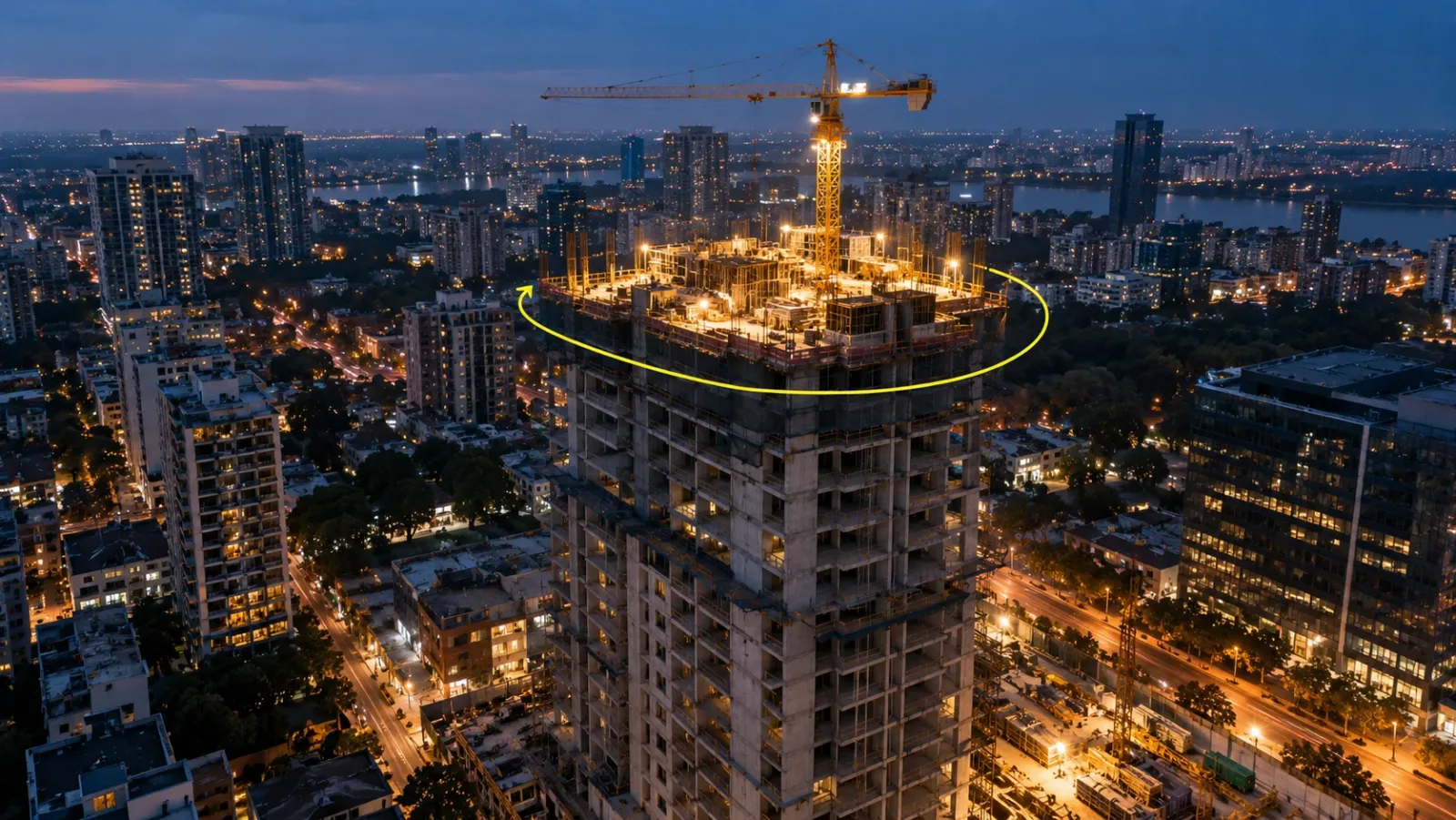
Executive Summary
- The Question: Which construction marketing videos should a developer or contractor make, when should each be shot, and how do you plan them so the content keeps coming for the whole project?
- The Answer: Treat video as a series tied to the programme, not a one-off. Five formats cover most needs: a launch film, regular progress films, time-lapse, FPV flythroughs and a project film that lets the work speak. Map each to a milestone, fix a monthly capture routine, and build the content calendar from the schedule.
- The YelloSKYE Angle: Studio IQ produces cinematic 4K aerial video, progress films, time-lapses and FPV flythroughs from the drones and fixed cameras that already record the site, so each milestone yields marketing footage without a separate production.
A construction marketing video is any film made to promote a project or the company building it: to sell units, reassure investors, win the next contract or build a reputation. The useful question is not whether to make one, but which formats to make at which stage, because a project that runs for two or three years offers a new story at every milestone and a single launch film uses only the first of them.
This guide is for developers and contractors planning video across a whole project. It sets out the main formats, when each should be shot, and how to turn the construction programme into a content calendar so footage arrives on a predictable rhythm. At YelloSKYE, video production is part of Studio IQ, our media and marketing offer. For aerial stills, location shots and view-from-floor photography for unit sales, see the companion guide to real estate drone photography.
Think in series, not single films
Most construction video goes wrong in the same way. The marketing team commissions an impressive launch film, sales starts, and then nothing new appears for eighteen months. Meanwhile the most convincing material a developer will ever have, a building visibly rising on schedule, passes without being filmed.
A project is a story told in episodes. Early on the story is the place and the plan. During construction it is momentum and craft. At the end it is the finished result and the experience of being there. Each episode suits a different format, and the formats depend on capture that has to be planned months before it is edited. Planning the series at the start, against the programme, is what makes the later episodes possible.
The five core formats
| Format | What it is | Strongest when | Main audience |
|---|---|---|---|
| Launch film | Aerial footage of the real site combined with renders, CGI and location animation | Before and at sales launch | Buyers, channel partners, investors |
| Progress film | Short, dated update cut from repeat drone flights and fixed-camera footage | Monthly or each reporting period through construction | Existing buyers, investors, lenders, social followers |
| Time-lapse | Months of construction compressed from a fixed viewpoint | Milestones and completion | Social, awards, leadership, bids |
| FPV flythrough | Continuous, close drone flight through and around the structure | Structure complete, and again when finished | Social and paid campaigns, launches of later phases |
| Project film | Longer edit telling the story of the build through the site itself | Completion, then reused for years | Future clients, award juries, recruitment, brand |
Launch film
The launch film sells the place and the promise. It usually opens with real aerial footage of the site and its surroundings, then shows the finished scheme through renders placed into that footage, and closes on what life there will be like. Studio IQ's project location animations add access routes and planned infrastructure to the map, and its 3D superimpose work aligns the rendered building with its real setting. YelloSKYE can produce this kind of material before construction starts by combining drone site footage with architectural renders and CGI.
The launch film is the only format that can be made before anything is built, so it carries the heaviest load. Keep a clear line between real footage and renders, because buyers will compare the two later.
Progress film
The progress film is the workhorse. It is short, regular and dated, and its job is to show that the project is moving. The simplest reliable method is a drone flight along the same path and height each month, so successive clips line up and can be shown side by side. Studio IQ's construction progress film is built this way, with monthly progress tracking, automated time-lapse generation and side-by-side comparison.
Progress films are rarely spectacular, and that is fine. Their value is steadiness: an investor or off-plan buyer who sees a new update every month stops worrying.
Time-lapse
Time-lapse compresses a long stretch of work into seconds and is the format most people share. It depends on a fixed camera installed early and left alone, so the decision belongs to the first weeks of the project, not to the edit. Our construction time-lapse video guide covers camera position, capture interval and editing in detail. In marketing terms, think of the time-lapse archive as raw material: the same frames feed social clips, milestone films and the final project film. In our time-lapse monitoring work, the fixed cameras that document milestones for the project team produce this archive as a by-product.
FPV flythrough
FPV (first-person view) drones fly fast and close, through openings and along corridors, in one unbroken move. The result feels like being carried through the building, and it holds attention on social feeds and in paid campaigns in a way slower aerials rarely do. Studio IQ uses FPV for high-speed, complex flythroughs and ad-ready social content.
There are two good moments for FPV on a project. The first is when the structure is up but open, so the drone can thread through the frame and show scale. The second is at completion, when it can move from the landscape through the lobby and out onto a balcony. Both need a cleared area and a pilot who has planned the route on site.
Project film without testimonials
Many contractors and developers want a film that represents the company, but customer testimonials are slow to arrange, need approvals and can date quickly. A project film can work without them by letting the site tell the story: the cleared land, the method, the trades at work, the scale of the pours, the details of the finish, and the completed building in use. Captions or a short narration explain what the viewer is seeing.
This format suits award entries, bid presentations and the company website, and it has a long shelf life. It is also the format that most rewards good capture discipline earlier on, because it is assembled almost entirely from footage gathered during the build.
Which formats belong at which stage
| Project stage | Milestone moments | Formats to plan | Capture needed |
|---|---|---|---|
| Pre-launch | Land acquired, approvals received | Launch film | Aerial site and location footage, render alignment |
| Launch | Sales gallery opens | Launch film cut-downs, first progress film | Short edits for each channel |
| Groundworks and foundations | Ground breaking, first concrete | Progress films, time-lapse starts | Fixed camera installed, monthly drone path set |
| Structure | Each few floors, topping out | Progress films, topping-out film, first FPV | Milestone shoot, FPV through the open frame |
| Envelope and fit-out | Facade complete, show unit ready | Progress films, show-unit film | Exterior aerials, interior footage |
| Completion and handover | Landscaping finished, keys handed over | FPV flythrough, time-lapse film, project film | Twilight aerials, final FPV, full archive edit |
Building a content calendar around milestones
Start from the programme
Take the baseline construction programme and mark every milestone a buyer, investor or future client would recognise: ground breaking, first concrete, structure reaching certain levels, topping out, facade closure, show unit, landscaping, handover. These become the anchor points of the calendar. Everything else fills the gaps between them.
Separate fixed routines from milestone shoots
Two kinds of capture feed the calendar. Routines run whatever happens: the fixed camera records every working day, and the drone flies the same path every month. Milestone shoots are booked around specific events and may need extra crews, FPV pilots or twilight timing. Routines guarantee you always have something to publish; milestone shoots give you the moments worth promoting.
Tie posts to events, not dates
Construction milestones slip. If the calendar promises a topping-out film on a fixed date and the last pour moves by three weeks, the marketing team is left with a gap or a premature announcement. Schedule milestone content as "within a week of the event" and keep a stock of evergreen material, such as craft details or past time-lapse clips, to fill any gaps.
A sample twelve-month rhythm
| Period | Routine output | Milestone output |
|---|---|---|
| Months 1–2 | Launch film cut-downs for each channel | Launch film released with sales |
| Months 3–5 | Monthly progress film from the fixed drone path | Ground-breaking and first-concrete clips |
| Months 6–8 | Monthly progress film, short time-lapse clips | Structure milestone film |
| Months 9–10 | Monthly progress film, side-by-side comparisons | FPV flythrough of the open frame |
| Months 11–12 | Monthly progress film, quarterly investor cut | Topping-out film with time-lapse of the full structure |
The exact months will follow your programme. The pattern is what matters: something small every month, something larger at each milestone.
Agree who owns what
Marketing owns the calendar and the edits. The project team owns site access, the safety plan for each shoot and early warning when milestones move. Someone senior should approve each release so nothing sensitive, such as a defect or a neighbour's property, goes public by accident.
Shooting on a live site
Every shoot on an active project needs coordination with the contractor. Agree flight times around crane lifts and deliveries, brief the drone team on site rules and keep the flight area clear. Outdoor drone flights also fall under the rules of the national aviation authority (in the US the FAA, in the UK the CAA, in the UAE the GCAA), which may require pilot certification and, near airports, extra airspace approval. If workers appear in footage, check they are wearing the right protective equipment, because any lapse will be noticed by viewers. If the site is not ready to be seen, film it later rather than editing around problems.
Getting more from every shoot
Each shoot should produce several outputs, not one. Plan landscape, square and vertical versions from the start, add captions for viewers watching without sound, and keep every raw clip with its capture date. A single topping-out shoot can supply a social clip, an investor update, a scene in the project film and a still for the website.
The bigger saving comes from capture that already exists. YelloSKYE's view is that the reality capture used to monitor a site can also supply its marketing: the fixed cameras in our fixed-camera monitoring work and the monthly drone flights that track progress already record the material progress films and time-lapses are cut from. For off-plan sales, the same drones can capture the view from future floors, as in our view-from-floor marketing use case. For navigable interior content rather than film, see our guide to virtual construction walkthroughs.
Common mistakes
- One launch film and nothing after. The strongest evidence, steady progress, never reaches buyers.
- Installing the fixed camera late. The early stages are lost and cannot be filmed again.
- Changing the drone path each month. Progress clips no longer line up for comparison.
- Promising content on milestone dates. When the programme slips, the calendar breaks.
- Renders left unlabelled. Buyers notice the difference when the real building appears.
- Keeping only final edits. Without the dated raw footage, there is nothing to build the project film from.
Next steps: planning checklist
- Mark recognisable milestones on the baseline programme and use them as calendar anchors.
- Decide which of the five formats you need and the stage each belongs to.
- Install the fixed camera before mobilisation and set a monthly drone path at a fixed height.
- Book milestone shoots, including FPV and twilight sessions, as soon as the dates firm up.
- Schedule milestone content relative to the event, with evergreen material held in reserve.
- Plan channel versions and captions for every shoot, and archive raw footage with dates.
- Agree ownership: marketing for edits, the project team for access and safety, a senior approver for release.
Frequently asked questions
What is a construction marketing video?
It is any film made to promote a construction project, a developer or a contractor rather than to manage the work. Common types include launch films, monthly progress films, time-lapses, FPV flythroughs and longer project films. Most projects need several of them at different stages rather than one.
What should a construction marketing video include?
Start with the one thing the audience must believe after watching: the location is right, the project is moving, or the builder does good work. Then show real footage that proves it, with dates and simple captions where they help. Renders and CGI are useful before construction, but they should be labelled and replaced with real footage as soon as it exists.
How often should a developer publish construction videos?
A short monthly progress update plus a larger piece at each major milestone works for most projects. Monthly drone flights on the same path keep the regular updates easy to produce, while milestones such as topping out or facade completion justify a dedicated shoot. Consistency matters more than volume.
Is FPV drone footage safe on a construction site?
It can be, with planning. FPV flights through a structure should happen when the area is cleared of workers and lifting operations, with the contractor's agreement and a certified pilot. Outdoor flights also fall under the rules of the national aviation authority, so permissions need to be in place before the shoot day.
Can construction marketing videos be made without customer testimonials?
Yes, and often they are stronger for it. A project film that shows the method, the scale and the finished quality lets the work make the case, and it avoids arranging interviews, approvals and releases. Captions or a short voiceover can explain what the viewer is seeing.